
The comfort zone is very familiar to most of us. It is the safe place where we can be undisturbed by challenges. The drawback of course, is that no learning and growth takes place there, and we do not experience the satisfaction that comes from achieving a goal with our efforts. The illustration below outlines the progression from comfort through fear to the desirable zones of learning and growth. What often stops us from stretching beyond comfort is the dislike of discomfort that is behind many of the obstacles that we create for ourselves, including fear. [Explore books and TED talks for overcoming obstacles to learn how to get comfortable with discomfort]
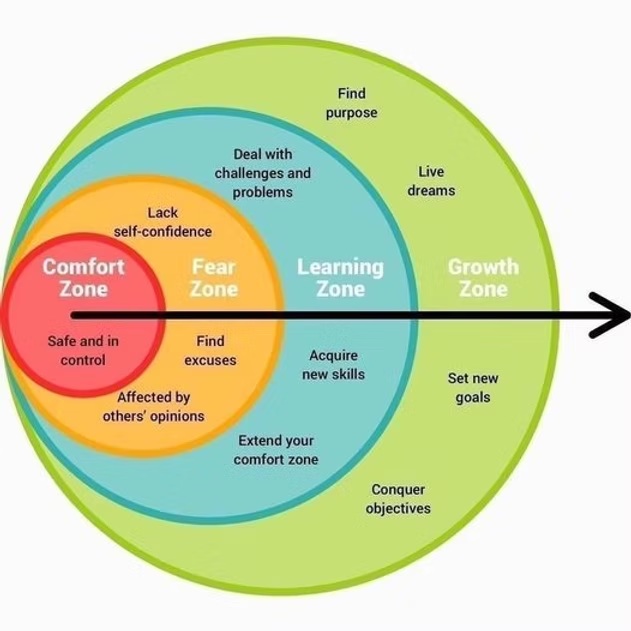 COMFORT ZONE: Safe and in control, but nothing new happens
FEAR ZONE: Self-doubt, excuses, diverted by procrastination, swayed by other’s opinions
LEARNING ZONE: Acquire new skills, stretch yourself, face challenges and deal with problems
GROWTH ZONE: Self-directed development, gain confidence, pursue meaningful goals, make an impact, and conquer objectives
Other illustrations add a further zone of Impact or Transformation: Align work with purpose, live your values, stop playing small, lead change in yourself, others, and the world. Learn more about the Wheel of Development at The Journey.
We all have different skills and experiences that affect the level of stretch that will be right for us. Individuals vary in the level of challenge they are able to take on. A social challenge that is easy for an extrovert may be harder for an introvert. Some might enjoy extreme sports, while others are not prepared to take them on. We all have different experiences and skills, and our emotional and physical strength fluctuates. To take on challenge that will stretch but not create more pressure than can be handled, complete an accurate assessment of these factors and the actual risk involved.
Examine the PEAKS to find the right amount of stretch:
• Personality
• Experience and skills
• Assess current state (emotional/physical)
• Know actual risk involved
• Size of the challenge
To take STEPS out of the comfort zone:
• Shift your limiting beliefs, adjust your self-talk
• Target a fear you want to conquer
• Embrace a growth mindset and try experiments
• Proceed with small steps to build confidence gradually
• Start with small challenges and then bigger ones
Face a fear gradually. If you are afraid of public speaking:
- Record yourself giving a talk and watch it
- Give a talk to a few close friends and family members
- Finally, give it to gradually larger groups.
Start with a low risk exchange. Build confidence with small challenges, then increase with larger ones. Here are some examples of social challenges:
• Initiate a conversation
• Negotiate a better deal
• Speak to a stranger
• Participate in a group
• Express an opinion
• Confront a problem
• Take a stand for a cause
Learn more with Dan Ballard’s TED talk Validation to value.
IDEAS FOR CHALLENGES to stretch beyond comfort zones:
Mental challenges
learn a new skill
take a different route
try a reading challenge
do a puzzle
memory game
participate in trivia night
Physical challenges
hold breath a little longer
lift a little more weight
delay eating when hungry
try a new food or recipe
take a cold shower
Social challenges
give a compliment
go to a new place alone
join a group
take dance lessons
do karaoke
Join Toastmasters
give a speech
Purposeful challenges
do an act of kindness
send a thank-you note
no complaints for a week
limit technology, tv, or social media
volunteer
See more ideas at Microhabits, and learn more at The Game of Life, the Behavior Change Pathway, and TED talk book discussion links.
Resources:
- 20 seconds of courage from nerdfitness
- https://forest-healing.co.uk/articles/comfort-zone-stretch-zone-and-panic-zone
- https://www.verywellmind.com/how-to-get-comfortable-being-uncomfortable-5204440
- https://www.mindful.org/embracing-discomfort-the-surprising-path-to-a-meaningful-life/
- https://ready4rise.com/stretch-goals-examples/

I seek to create order from the chaos of complex information. Join me at the Daily PlanIt to gain insights, inspiration, and information to increase skills for a better life. I unlock the power of teaching reading with phonics in the pursuit of literacy at www.phonicspow.com. In my spare time I explore books and movies, often choosing titles available on both screen and page.


[…] says the antidote to limiting beliefs is hope, achieved through small, actionable acts of agency. Optimal challenges give us opportunities to build competence with mastery experiences. By successfully taking charge […]