Love Books

LoveBooks

Books are a great place to look for the answers to questions. Sometimes there is one especially excellent book on a subject with all the answers. Other times different books contain elements of truth that can begin to make sense when they are combined. I’ve read lots of books about a subject that seems simultaneously both simple and amazingly complex. While there are many more books yet to read, here are a few ideas from books about love.

We say that we love our pets, our family, our friends, certain foods, a work of art, our partner. The same word can mean so many different things, no wonder it is confusing. M Scott Peck’s defines love in his book “The Road Less Traveled” as: “the will to extend one’s self to nurture one’s own or another’s spiritual truth.”

This definition includes self-love. We must begin with loving ourselves in order to be capable of both loving others and receiving love. To love ourselves, we need to fully realize that we are loved simply because we are alive. A higher power is one completely reliable source of unconditional love. Since we are all loved, it follows that all deserve to be treated with love, wherever we are on our travels.

This definition also implies effort. Love requires our on-going efforts to keep it growing, like a garden that we plant. Love is either nurtured and grows or neglected and dies. We either choose to act lovingly or we choose not to. We learn to communicate, or we don’t. We accept others as they are, or attempt to control them.

If we have not learned how to love, we may believe that love can be found by pursuing praise, power, pleasure, and safety. Greg Baer calls this Imitation Love in his book “Real Love.” While these things are not inherently bad, they will never provide true happiness when they become a substitute for real love. We may choose these forms of Imitation Love simply because we do not realize there is another choice.

When we do not receive unconditional love, we feel empty and afraid, and learn getting and protecting behaviors, which are actions to get others to like us or to avoid and prevent others from hurting us. Brief satisfaction may result from these behaviors, but the long-term damage is considerable, the worst effect being that they make it impossible to feel Real Love even when it’s actually being given to us. Only when we take the risk of telling the truth about ourselves is there the possibility of unconditional love.

We may not have learned how to act lovingly, but if we do not change, we continue to be defined by our past. In “All About Love” by Bell Hooks, the author lists actions that convey love. Actions that express love include: care, affection, responsibility, respect, commitment, trust, recognition and communication. Conversely, actions that destroy love include hurt, abuse, neglect, disrespect, manipulation, and controlling. We can learn to act lovingly towards all people, but love reaches a deeper level with some who touch our hearts. When this happens it is quite mysterious.

While love is a gift freely given, healthy relationships are about balanced appreciation and mutual respect. We show love by giving our time and attention, especially by actively listening. Gary Chapman describes the “Five Love Languages” as acts of service, quality time, physical touch, words of affirmation, and gifts. One love language speaks most clearly to us, and it may be a different one for your partner.

Life is change, but often not in ways that we might expect. Since nobody is perfect, there’s usually something we would like to change, in ourselves as well as others. But change is the ultimate self-help project, making efforts to change others spectacularly ineffective and problematic.

In “Real Love,” Greg Baer says that attempts to control others indicate that we are not accepting them. This does not mean we must accept unloving behavior; it does mean setting your own limits and requesting what you want without demanding it or expecting you will always get it.  There’s so much more to learn, it’s time to read more books!
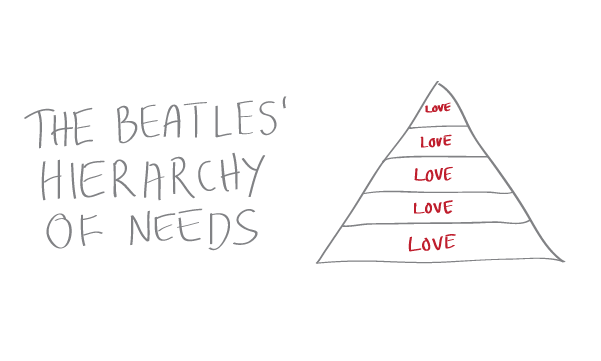
Posted in Books, love & relationships

Food expiration dates

Make room in your cupboards by clearing out the old stuff. Sometimes it is obvious when food needs to be discarded. But other times it’s a little less clear. This guide from the Real Simple site can help. Wouldn’t it be neat if there was some kind of inventory system that would alert us when items are due to expire soon along with suggested recipes for using them?!

Posted in productivity

A Prison of Our Own Making

This weekend I went to see the movie “Walk the Line” based on the life of Johnny Cash. It portrays his struggles with coming to terms with a difficult childhood and other pressures. In the audition that launched Johnny on the road to success, Sam Phillips asks him this: If he were dying and had time to only sing one song, what would it be? That’s the song he wants to hear, and the song that Johnny needs to sing. It’s so true for all of us: we need to sing the song we were meant to sing. And when we do, it will surely sound right to everyone else.

The song he sings is “Folsom Prision Blues,” and although Johnny hasn’t actually spent time in jail (at that time), his song is authentic because he lives in another type of prison: a prison of his own making. Some of us encounter great difficulties in life, but we remain imprisioned when we let circumstances continue to dictate the thoughts we think and shape the course we take.

Hyrum Smith, the CEO of Franklin-Covey, wrote the book “Ten natural laws of successful time and life management.? In the book he describes the Franklin Reality Model, which involves examining beliefs to determine if they are based on truth, and if the results of choices based on those beliefs work for you.
We can plant seeds of new thought with positive affirmations. Describe the result you want in 1st person present tense as if it’s already happening, and repeat often. Coping.org describes how to develop positive affirmations. Discovering your beliefs is a key part of understanding who you are and where you want to go. Break free and sing that song you are meant to sing.
Posted in goals, personal development

The Different Kinds of Love

The many ways we use the word love are so confusing! The same word can have such different meanings. In the book “The Four Loves” C.S. Lewis has based his ideas on the Greek words for love.

This could be a way to differentiate between them as we think and speak about love.

  • love with a little l could refer to what we mean when we say “I love pizza.”
  • Love with a big L could be the love we feel for family and friends. (Philios)
  • Romantic love would be what we feel for a special person in our life. This usually begins with infatuation or the “in love” experience, but can mature into Real Love. (Eros)
  • LOVE in all capital letters is the unconditional love we receive from our higher power and give back to mankind. (Agape)

Learn more about love from this post based on love books, and even more Greek words for love from yesmagazine.org.

Posted in love & relationships

A Weekly Personal Development Plan

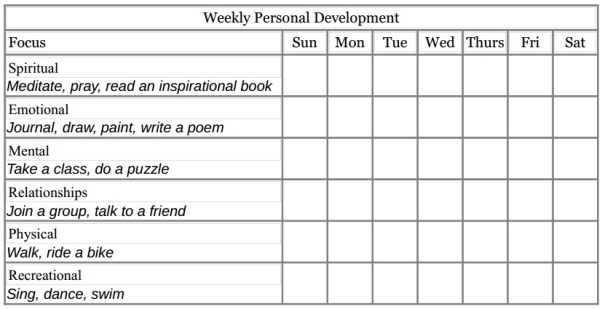
There are many life areas to set goals and develop personally. The Life Area Energy Level Gauge is a tool that makes it easy to see where to begin with areas that are low. Then plan for actions to take to increase the levels with a weekly personal development plan.

low…………………………………….. high

  • Mental (learn)
  • Spiritual (grow)
  • Emotional (receive & give)
  • Relationship (share)
  • Social (connection)
  • Physical (improve & care for)
  • Financial (work)
  • Recreational (enjoyment)

Weekly Personal Development Plan

Do something daily, weekly, and monthly, or focus on one area each day of the week.

WeeklyPersonalDevelopment

Further Reading: Develop Covey’s 4 intelligences at Life Optimizer

See also Plan For Growth

Posted in goals, personal development

Celebrate!

Looking back over the past year, be sure to congratulate yourself on the successes you have achieved. Sometimes we are in such a hurry to move on to the next goal that we don’t take the time for the pat on the back we deserve. Take time now to express appreciation for the blessings you’ve been given and thank those who have helped you.

Posted in goals, personal development

Visualization Exercises

How do you see your life in the next year? The more clearly we can paint a detailed picture, the more likely it is that it will come true.

the phrase notice your senses on a pin board

Photo by Vie Studio on Pexels.com

The following exercises are from the book “Experiences in Visual Thinking” by Robert McKim.

Close your eyes and summon a detailed image with all five senses:

  • Your childhood bedroom
  • A rosebud
  • A potato chip
  • Washing your hair

Try a standing mindfulness meditation at the Coping Skills Toolkit. Create a Vision Board to bring goals and aspirations to life.

Learn more

  • Athletes often use visualization as a technique to improve performance.
  • Take a cool look at different ways of making data visual.
Posted in goals, personal development

The most important words

From “The Eighth Habit” by Stephen R Covey:

  1. Please
  2. Thank you
  3. I love you
  4. How may I help?
Posted in love & relationships, personal development

How to Make Goals Specific & Measurable

Goals that are clearly defined are specific and measurable. Measures motivate as they enable us to see progress (or a lack of it).

The best measures are:

Meaningful
Evidence of accomplishment
Target key drivers of change
Reveal results
Include sensory descriptions
Clear and simple language
Specific

Meaningful measures are relevant to results. They are clearly connected to the desired outcomes or results. Learn more about objectives and key results at How to Choose VIP AIMS.

Evidence of accomplishment. Anything that is observable can be counted, and if it can be counted, it is measurable. – from “How to measure anything” by Douglas Hubbard. See 7 Simple Principles for Measuring Anything

Target key drivers of change. The most significant actions with the greatest impact.

Reveal results. Explain how to achieve the desired outcome.

Include sensory descriptions. Choose sensory words that describe evidence of the result. Use language that describes what we and others would see, hear, feel, do, taste or smell if our result was happening now. – From Stacey Barr, author of “Prove It!” See Five Steps to Find the Right Measures.

Clear and simple language. Choose simple words that are very clear. Try entering your value statement into the simple writer tool at https://xkcd.com/simplewriter/.

Specific. Define goals and measures in definite terms. Ask the right questions.

Learn more about objectives and key results at How to Choose VIP AIMS.

I struggled with making goals specific and measurable until I discovered a simple formula at this Small Business Success website. “I will (goal + performance measure) BY (specific actions).” Here is an example of how it works:

  • I will (lose weight)
  • By doing what? (by exercising)
  • When? How often? How much? How many? (Every morning I will do aerobic exercise that will increase my heart to 155 beats per minute for 30 minutes) Note: for information on how to calculate your own target heart rate zone, visit MissouriFamilies.org
  • Measured by (heart rate monitor, mark calendar)

tapemeasure

What we measure improves (Pearson’s Law)- “That which is measured improves. That which is measured and reported improves exponentially.”

If you can not measure it you can not improve it. – Lord Kelvin

MEASURES MATTER – Use MEASURES to quantify results

Measures

Metrics – provide a quantitative assessment of performance, like these examples for two of twelve life areas. Find more ideas for goal metrics at An Annual Review.

  • Physical: weight, body mass index, blood pressure
  • Financial: Income, savings, investments, net worth

Explain how much, how many – think of STAMP to Always Be Communicating Value

  • Saved, served, sold, supervised
  • Time
  • Amounts
  • Money made
  • Percentages

Add checkmarks to a chart – an example would be a Seinfeld chart to track progress in developing a habit.

SeinfeldChartSM
Steps to completion – a measure of productivity is how many tasks per day are completed on your to-do list.

Checklist

Use numbers – like “10 % increase in sales,” “supervised 5 people,” “saved $50 a month for a year,” etc.

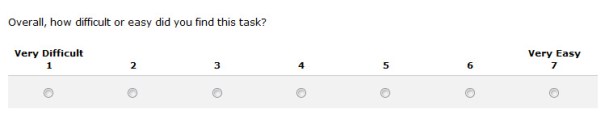
Rating scales – a rating scale can be used to measure abstract values. One kind of rating scale is the Likert scale.

ratingscale

Some goals are downright difficult measure. If you want to be a better parent, how do you measure that? It can be helpful to do some research. What actions are most likely to get you closer to your goal? What do good parents do? Or look at parents who do not excel at it and turn it around to do the opposite.

Examples of challenges met – use CARE to describe a time that you faced a

  • Challenge and took…
  • Action for a…
  • Result to find…
  • Examples

Success file – keep a success file of projects completed, and remember to celebrate before you choose a new goal in the planning process.

John Doerr talks about Objectives and Key Results (OKRs) in his book “Measure What Matters” and his TED talk “Why the Secret to Success is Setting the Right Goals” (11:51).

Find charts and forms to track progress at the Goal Toolkit, This post is part of the How to Set Goals tutorial.

See also Making Goals SMART | Action Steps | Time Frames and Target Dates | Keep Goals Visual & Visible

Posted in goals

Get Real

To get real means to apply complete honesty to yourself, and to see the world as it really is. It means facing the truth about everything in your life. It means taking the time to really look. It means acknowledging that maybe you aren’t in actual fact exercising as much as you say you are, and maybe you’re eating more unhealthy foods than you’d like to admit. Are you really happy with your job and your relationships? Are you truly being the best you can be? The truth can hurt, but we can only change that which we see. If you’re fooling yourself, that makes you the fool. The truth will set you free.

Posted in personal development
eBooks

Enter your email address to follow this blog and receive notifications of new posts by email.

Archives
Blog Stats
  • 743,002 hits