
Emotional – Activity: Manage Emotions
Self regulation of emotions is a part of emotional intelligence. Learn to pause to identify emotions and choose to respond in thoughtful ways.
Emotions and the Brain
When a fight or flight response is triggered by a perceived threat, it creates emotions that can be particularly difficult to manage. Understanding how the brain reacts is important for emotional regulation. A pause between stimulus and response can allow us to make better choices.
Watch: Emotions and the brain
- The amygdala (primitive brain) has an instantaneous response to perceived threat
- A flood of chemicals creates emotions (fear, anger) and physical reactions including increased heart rate, fast breathing. Big Think video by Joseph LeDoux, author of “The Emotional Brain“
- Chemical flooding makes it difficult to access the thinking part of the brain. Daniel Goleman, author of Emotional Intelligence, described this as the amygdala hijack. More recent research indicates we still have an ability to manage emotions. Psychology Today
- The initial chemical flooding subsides in six seconds, allowing space for rational thinking and choices. www.6seconds.org
- Neuroscientist Dr. Jill Bolte Tayler says it takes 90 seconds for chemicals to flow through. Psychology Today
- The body takes about 20 minutes to return to normal after a full fight or flight response. Psychology Today

Ways to manage emotions
- Recognize emotions in the body.
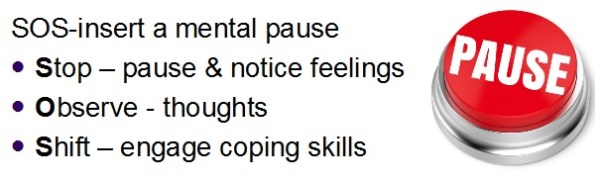
- Expect to take a mental pause to insert thought: Stop – Observe – Shift
- Stop and take a break until chemical flooding subsides.
- Practice coping skills like deep breathing, self-talk, or going for a walk.
- Observe thoughts and beliefs about the situation to understand emotions. Check the validity of assumptions and dispute irrational thoughts.
- Next, adopt a growth mindset and view problems as challenges.
- Develop resilience and don’t take things personally. (see the 4 agreements)
TAME the amygdala hijack:
• Take a pause and slow breaths
• Act to choose a healthy response ↴
• Move your body, splash cold water on your face
• Examine the situation and your thoughts
The skills of Cognitive Behavioral Therapies (CBT) can help in emotional regulation. Learn about Acceptance and commitment therapy (ACT), Dialectical behavioral therapy (DBT), and Rational Emotive Behavior Therapy (REBT). ACT uses mindfulness and alignment with values for accepting negative emotions rather than trying to suppress them. DBT balances acceptance of emotions with skills that help with distress tolerance and emotional regulation. EBT helps you learn to notice, challenge, and replace irrational thoughts and beliefs to shape emotions with rational thoughts. Find books and TED talks to learn more at Creating Clarity.
Emotional Regulation Resources
- Bridge the Gap by Jennifer Edwards and Katie McCleary, TED talk Elevate your E.Q.
- Living an Exceptional Life by C.J. Calvert, TED talk How to manage your emotions in difficult times
- see more at the Six Rs of Resilience and the Clarity pathway at Pinterest
- Self-regulation for adults from harvard.edu
- Interactive well-being scale from 6seconds.org
Fight – the anger response
Anger is a normal emotion that can cause problems when it is not handled correctly. We feel anger when we perceive unfair treatment, or are threatened or prevented from reaching our goals. When we handle anger correctly, we address unfair treatment without harming others.
- The physiological responses that come with anger can include: headaches, a clenched jaw, flushed face, tense shoulders, a fast pulse and racing heart, fast and shallow breathing.
- Be aware of the feelings that are underlying the anger. Dr. Phil says, “Anger is nothing more than an outward manifestation of hurt, fear, or frustration.”
- Use I statements if you choose to express your feelings.
- How the Brain Works with Anger
When someone else is angry
- Conflict Resolution Emergency Kit
- Dale Carnegie-say “I understand you’re upset. We’ll talk when you feel better.”
Anger Resources:
- Emotion regulation at dialecticalbehaviortherapy.com
- Mayo Clinic
- APA
- The Amygdala Bypass System at Changing Brains
- Anger Management at Helpguide.org
- Anger Management & a Quiz at Mindtools.com
- Printable Dealing With Negative Emotions
- Shifting Emotions Exercise (pdf) from the University of Minnesota
- The Right Way to Get Angry from The Greater Good Science Center
- How to Deal with Anger from goodtherapy.org
Books and TED talks (Amazon affiliate links provide a small commission that helps to support the Daily PlanIt):
- “Why We Get Mad” by Ryan Martin, TED talk Why we get mad, and why it’s healthy, Anger Cognition Scale
- TED talk by Juna Mustad Anger is your ally
- TED talk by Brad Bushman: Anger management: what works and what doesn’t, Don’t get hangry: feed your brain healthy food
- “How to Control Your Anger Before It Controls You” by Albert Ellis
- “Taking Charge of Anger” by Dr. Robert Nay
Flight – the Fear Response
Fear can also be triggered when there is a perceived threat. Learn more about the fear response at Cultivating Courage.
Learn more at the Power of a Pause for Positive Shift
This week if I feel anger, I will notice physiological changes and take a mental pause to understand what caused the anger and how to respond. I will practice deep breathing and other calming techniques. I will use a worksheet to analyze a situation when I was angry.
This is one of the weekly activities for a Year of Personal Development

I seek to create order from the chaos of complex information. Join me at the Daily PlanIt to gain insights, inspiration, and information to increase skills for a better life. I unlock the power of teaching reading with phonics in the pursuit of literacy at www.phonicspow.com. In my spare time I explore books and movies, often choosing titles available on both screen and page.


[…] the emotions that these physical signs may be indicating. Signs of anger can include…hot or flushed face, clenched jaw, tense and tight shoulders, fast breath and […]
[…] shift begins with the power of the pause. SOS is a method used to manage emotions that works like […]
[…] regulation – understand emotions are connected to thoughts and practice positive self-talk. Manage anger and other emotions: learn to pause and engage coping […]
[…] more at Manage Emotions and the Development pathway at […]
[…] MANAGE: self regulation of emotions (learn more at Manage Emotions) ↳ SHORT TERM (breathe slowly, splash cold water) Wendy Suzuki How to calm your anxiety • […]
[…] powerful reaction makes accessing the thinking part of the brain (prefrontal cortex) difficult. To manage emotions, […]
[…] Feeling by Marc Brackett, TED talk Emotional literacy [Emotional intelligence, Power of a pause, Manage Emotions, Emotional intelligence TED […]
[…] Handle stress • Emotional regulation • Add awareness • Develop […]
[…] Reframe thoughts with cognitive restructuring, a method used to manage emotions. […]