
Career – Activity: Set Work Goals
Planning goals for work adds meaning to an important part of our lives. There are ways that employees can take charge to shape their engagement at work, and a good way to do so is to set meaningful work goals. A lot of time is often spent at work, and work that is meaningful goes a long way toward increasing personal happiness.
Work goals provide:
- Growth- choose goals with the right amount of challenge and stretch
- Opportunities- goals open up opportunities for advancement
- Autonomy- goals are a way to influence our work
- Learning- include learning as one of your work goals
- Skills- goals can develop work skills
To set work goals:
- Begin with a look at your job title (role) and job description (responsiblities and job duties) Find job descriptions at O*NET
- Review the mission statement of the organization
- Examine ideas for work goals that are STARS ↴
- Add learning activities to develop work skills for a development plan
- Decide on top priority goals ↴
Examine ideas for work goals that are STARS:
- Select goals that align with the mission of the organization and your personal values
- Tie in with motivation related to your Myers-Briggs Personality Type
- Add high value by meeting the needs of the organization
- Relate to the key results and tasks that need to be accomplished for your job
- SMART – Specific, Measurable, Attainable, Relevant, and Time Bound
Decide on Top Priority work goals. The best work goals are HUGE! They:
- Have high impact and are important.
- Use strengths and talents.
- Give good return on Investment.
- Engage interest and expand learning.
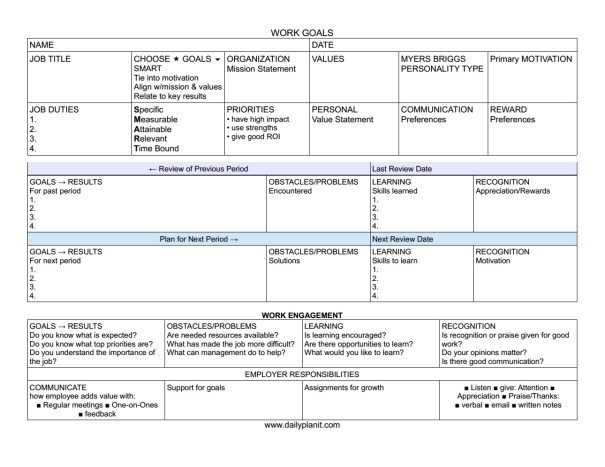
Use the Work Goal form at the Daily PlanIt Shop or the free Work Goals form at Development Plans are Not Just for Work.
This week, I will set four measurable goals that will add value to my work with a Work Goal Form.
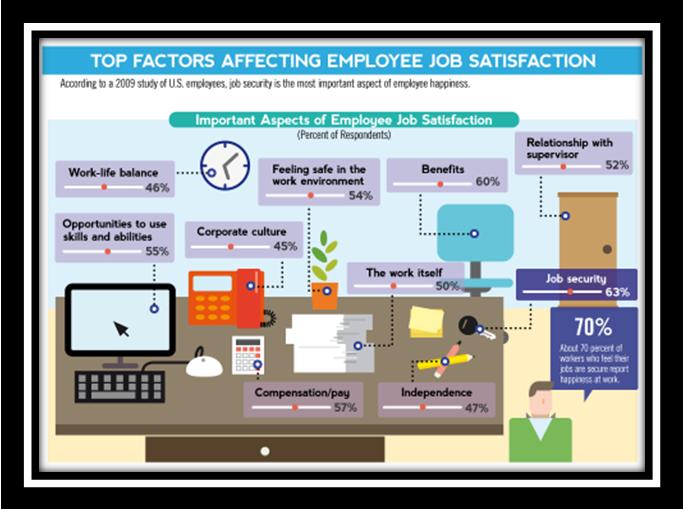
Work Engagement
Increase work engagement with work goals that provide antidotes to job misery. The opposite of work engagement is described in a book by Patrick Lencioni, “Three Signs of a Miserable Job,” which are:
- Anonymity
- Irrelevance
- Immeasurement
Three Remedies to job misery are work that provides RECOGNITION, RELEVANCE and RESULTS. Setting work goals helps to meet most of the needs that require satisfaction for employee engagement.
RELEVANCE: Work goals that are relevant to the mission and goals of the organization, and align with personal values create a sense of purpose.
RESULTS: Include metrics to measure results.
RECOGNITION: The final key for an engaged employee is recognition, preferably tied to results, i.e. relevant goals achieved.
Employers can go a long way toward meeting needs for appreciation by simply providing praise for a job well done, or verbal or written thank-yous. Communication and Feedback are essential.
- Gallup Research resulted in 12 questions to measure Employee Engagement.
- There are tips for setting performance goals and Recognition Ideas (pdf) at MIT.
- CNN has a Work Life Balance Calculator.
- Learning Activities for Work Engagement and Development Plan.
See also: What Employees Say They Want | Top 10 Things Employees Want | Career Goals Examples from the Udemy Blog.
More from the Daily PlanIt: Develop Work Skills | Development Plan | Work Engagement Board at Pinterest | Work Skills Toolkit | Work Goals at the Daily PlanIt Stiky Wiki
This is one of the weekly activities for a Year of Personal Development.

I seek to create order from the chaos of complex information. Join me at the Daily PlanIt to gain insights, inspiration, and information to increase skills for a better life. I unlock the power of teaching reading with phonics in the pursuit of literacy at www.phonicspow.com. In my spare time I explore books and movies, often choosing titles available on both screen and page.


 Daily PlanIt
[…] See also: Set Work Goals […]
[…] move on to the next. If time is available, add more tasks from your weekly plan, repeating tasks, work goals, and action steps for goals and […]
[…] work goals that are relevant to the mission and goals of the organization. Optimal organizations are clear […]
[…] if improved, would have the most impact? Use a development plan and find learning activities to set a goal for developing the […]
[…] Identify skills needed and plan to develop the skill that would provide the most benefit if improved. Learn more about how to Set Work Goals. […]
[…] results with relevant work goals. Work goals that align with the mission of an organization and your personal values contribute to work […]
[…] Top Skills Employers Want, Learning Activities for Work Engagement, Skills for Career Advancement, Work Goals, and the Work Skills Toolkit. Find more pathways and TED talks by speakers who are also authors at […]