
Goals that are clearly defined are specific and measurable. Measures motivate as they enable us to see progress (or a lack of it).
The best measures are:
• Meaningful
• Evidence of accomplishment
• Target key drivers of change
• Reveal results
• Include sensory descriptions
• Clear and simple language
• Specific
Meaningful measures are relevant to results. They are clearly connected to the desired outcomes or results. Learn more about objectives and key results at How to Choose VIP AIMS.
Evidence of accomplishment. Anything that is observable can be counted, and if it can be counted, it is measurable. – from “How to measure anything” by Douglas Hubbard. See 7 Simple Principles for Measuring Anything
Target key drivers of change. The most significant actions with the greatest impact.
Reveal results. Explain how to achieve the desired outcome.
Include sensory descriptions. Choose sensory words that describe evidence of the result. Use language that describes what we and others would see, hear, feel, do, taste or smell if our result was happening now. – From Stacey Barr, author of “Prove It!” See Five Steps to Find the Right Measures.
Clear and simple language. Choose simple words that are very clear. Try entering your value statement into the simple writer tool at https://xkcd.com/simplewriter/.
Specific. Define goals and measures in definite terms. Ask the right questions.
Learn more about objectives and key results at How to Choose VIP AIMS.
I struggled with making goals specific and measurable until I discovered a simple formula at this Small Business Success website. “I will (goal + performance measure) BY (specific actions).” Here is an example of how it works:
- I will (lose weight)
- By doing what? (by exercising)
- When? How often? How much? How many? (Every morning I will do aerobic exercise that will increase my heart to 155 beats per minute for 30 minutes) Note: for information on how to calculate your own target heart rate zone, visit MissouriFamilies.org
- Measured by (heart rate monitor, mark calendar)

What we measure improves (Pearson’s Law)- “That which is measured improves. That which is measured and reported improves exponentially.”
If you can not measure it you can not improve it. – Lord Kelvin
MEASURES MATTER – Use MEASURES to quantify results

Metrics – provide a quantitative assessment of performance, like these examples for two of twelve life areas. Find more ideas for goal metrics at An Annual Review.
- Physical: weight, body mass index, blood pressure
- Financial: Income, savings, investments, net worth
Explain how much, how many – think of STAMP to Always Be Communicating Value
- Saved, served, sold, supervised
- Time
- Amounts
- Money made
- Percentages
Add checkmarks to a chart – an example would be a Seinfeld chart to track progress in developing a habit.

Steps to completion – a measure of productivity is how many tasks per day are completed on your to-do list.

Use numbers – like “10 % increase in sales,” “supervised 5 people,” “saved $50 a month for a year,” etc.
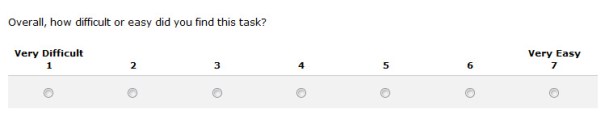
Rating scales – a rating scale can be used to measure abstract values. One kind of rating scale is the Likert scale.
Some goals are downright difficult measure. If you want to be a better parent, how do you measure that? It can be helpful to do some research. What actions are most likely to get you closer to your goal? What do good parents do? Or look at parents who do not excel at it and turn it around to do the opposite.
Examples of challenges met – use CARE to describe a time that you faced a
- Challenge and took…
- Action for a…
- Result to find…
- Examples
Success file – keep a success file of projects completed, and remember to celebrate before you choose a new goal in the planning process.
John Doerr talks about Objectives and Key Results (OKRs) in his book “Measure What Matters” and his TED talk “Why the Secret to Success is Setting the Right Goals” (11:51).
Find charts and forms to track progress at the Goal Toolkit, This post is part of the How to Set Goals tutorial.
See also Making Goals SMART | Action Steps | Time Frames and Target Dates | Keep Goals Visual & Visible

I seek to create order from the chaos of complex information. Join me at the Daily PlanIt to gain insights, inspiration, and information to increase skills for a better life. I unlock the power of teaching reading with phonics in the pursuit of literacy at www.phonicspow.com. In my spare time I explore books and movies, often choosing titles available on both screen and page.


 Daily PlanIt
Fantastic, this is a great example of setting specific goals. You find most people stop at the goal (I want to lose 20 pound, I want to save $20,000) a specific how, when usually doesn’t come into play when people are trying to be specific. Or perhaps I just like the formular it just makes sense, this clicks with me.
Thanks for spelling it out.
I will continue reading your tips! greetings
[…] Clarity. […]
[…] to job misery are work that provides RECOGNITION, RELEVANCE and RESULTS. Work goals that create measurable results which are relevant to the Mission and goals of the organization meet most of the needs that […]
You can also use ABCD which teachers use.
A – audience
B – behaviour
C – condition
D – degree
Explained in detail here http://ets.tlt.psu.edu/learningdesign/objectives/writingobjectives
Thanks for your comment, I love the link you shared!
[…] can use this formula to make any goal SMARTer. Some goals are more abstract and downright hard to measure. Usually a rating scale can […]
[…] a goal and make it SMART: Specific, measurable, attainable, realistic, and […]
[…] key results that are measurable to know if progress is being made toward an outcome. Ask “How will I know that this outcome […]
[…] Outcomes – gain motivation by observing progress on measures. […]
[…] that are meaningful. Next you make a a written plan to make goals SMART with specific action steps, measures, and target dates set. Finally comes the hardest and most critical part: taking action on […]
[…] Important Mission (what) • Purpose (why) • Active movement • Inspiring appeal • Meaningful measures • Significant […]
[…] will be the measure of success? Does the project/idea have high appeal? Is there really a need for the problem to be […]
[…] measures. Measures matter, so look for meaningful metrics to track. Some ideas for metrics and tools to track them are […]
[…] Measures matter, so feel the feedback. We need to know how we are doing. It’s not fun if we don’t know we are getting somewhere. Feature your goals, keep them visual and visible, and review progress. The sweet spot is a place of high value and low effort, but some goals involve sacrifice and sometimes even pain. The Economy of Goals means that goals are more likely to be accomplished if the benefits outweigh the resources required to obtain it. End goals lead to a meaningful journey by providing intrinsic motivation. […]
[…] that specific and written goals are far more likely to be accomplished. Planning and making goals measurable are some of the vital skills for setting goals. Learn more about planning at Skills Employers Want […]
[…] Pursue purpose • Look at values • Action steps • Note measures • Set […]
[…] Get feedback. Measure what matters and pay attention to the […]
[…] Metrics: How to make goals specific and measurable […]
[…] and Great movement. Learn more at the Priority Flowchart. See the impact of your work by choosing measures for goals and reviewing results regularly. This provides feedback which is important for […]
[…] Target trust: communication is open and honest• Remember results: focus on outcomes• Accept accountability: roles and expectations are clear• Contain conflict: handle differences […]
[…] Track data: How long it takes to establish a habit likely will vary depending on how difficult it is. One […]
[…] Solve issues • Useful • Complete • Commit to measures • Engage interest • Smart • Simple • Follow a vision • Use skills • Leverage […]
[…] How can you increase focus? How can you overcome procrastination and get motivated? How will you measure results? Do you have all the information you need? How much do you want to achieve it? Do you have […]