
A written habit plan = a lot more success!

Download the Habit Worksheet (pdf)
A written plan for implementing a habit can increase the likelihood of forming it by 2 to almost 3 times, according to articles at Huffington Post & Asian Efficiency. We are more likely to take small steps down a path that is clear.
1. SMART Habits are Specific, Measurable, Achievable, Relevant, and Time based.
2. Small steps: outline the steps that need to be taken. B J Fogg advocates baby steps in his book and TED talk. (links at the end of the post) He also has created a helpful tool called the Behavior Wizard.
3. Motivation: focus on the benefits. The benefit of a goal must exceed the resources required to obtain it. – read more at my post on The Economy of Goals. Employ the strategies to overcome procrastination at Tip the Scales To Master Motivation: Visual Strategies to Overcome Procrastination.
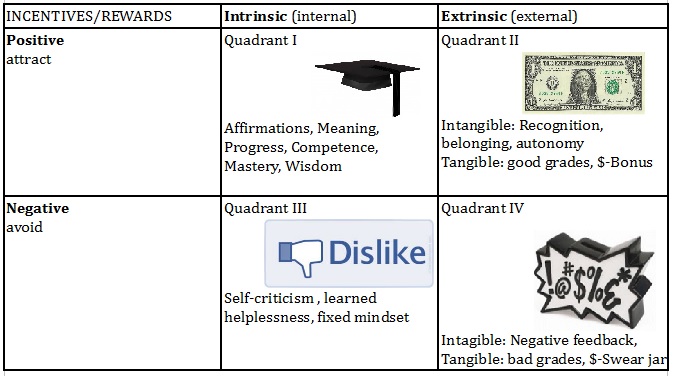
4. Add Incentives: Incentives can be positive (like rewards) or negative. Behavioral economics shows how things like accountability and social sharing can shape behavior. Watch the Dan Ariely TED Talk on Self Control to learn about incentives, and more about behavioral economics at Can You be nudged into saving money? from pbs.org.
5. Address Obstacles: if possible, remove temptations to fail, or have a plan for dealing with them. Make good habits easy, and bad habits hard. To increase a positive habit, remove obstacles. Shawn Achors’ 20 second rule says that lowering the barriers to change by even 20 seconds dramatically increases chances of success. To increase a positive habit, make it easier. See the interview with Shawn Achor, New Harvard Research Reveals a Fun Way to Be More Successful at Barking Up the Wrong Tree. If you want to exercise first thing in the morning, set out everything you need. To decrease a negative habit, add obstacles. Google decreased the amount of M & Ms employees were eating, simply by making it slightly more difficult. If you want to watch less television, remove the batteries from the television remote.
6. Resources: Review your available resources and obtain any tools needed.
7. Reminders: Remind yourself with a timer or automated reminders. Many habit tracker apps are available for smartphones and tablets that can help. I like the Loop Habit Tracker for Android, Strides may be a good one for ios. James Clear (author of Atomic Habits) recently released Atom. The Blip Blip Android app is a gentle hourly reminder, and reminders can be set in Google Keep notes.
8. Timing: decide when will it be done and link triggers to daily routines. Trigger a new habit by connecting it with other routine activities according to the desired time or frequency. Morning meditation after breakfast is an example of a trigger. A more frequent habit can connect with something you do more often, like taking a deep breath each time you take a drink of water. Read more about habit stacking from James Clear. Since willpower is a limited resource, tackle a new habit early in the day before it is depleted. Exercise earlier in the day provides feel-good benefits throughout the entire day.
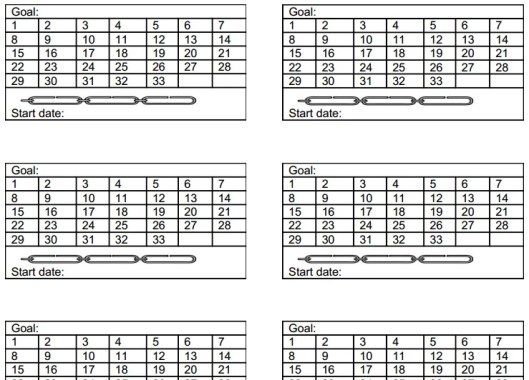
9. Track data: How long it takes to establish a habit likely will vary depending on how difficult it is. One study showed on average, it took 66 days to form a new habit. Jerry Seinfeld’s Don’t Break the Chain Strategy is one well-known method for creating a habit. Each day that you do the task you have set for yourself, simply mark a calendar each day with a big red x. Then keep it going and don’t break the chain. Read more about Jerry Seinfeld’s Don’t Break the Chain Strategy from Entrepreneur magazine and a habit tracker guide from James Clear.
10. Review the results for feedback on how you are doing.
The words “resolution,” “habit,” and “goal” are sometimes used interchangeably, but there are differences. An understanding of what habits are is helpful before beginning to plan for behavior change.
Goals are an end toward which effort is directed. They add value in a life area, and they have a clear end-point.
Resolutions are a declaration of our firm decision to do or not to do something. A typical resolution is not very SMART.
Habits are acquired behavior patterns that are regularly followed (for good or ill.) They may be something you want to start (positive) or stop (negative). While creating or changing a habit can be a goal, they are something we want to continue indefinitely, so habits have no clear end point. Have a sustainable plan for a lower intensity after a habit has become well established, and move on to other things.
MORE PRINTABLE HABIT TRACKERS
- Printable Daily PlanIt Seinfeld Charts (pdf)
- A one page printable Habit Tracker from the Daily PlanIt or other habit trackers at the Household Notebook Pinterest Board.
- Goal Charts at Goal Master List can also track progress.
3 Steps of Habit Change
“The Power of Habits” by Charles Duhigg, TED talk The Power of Habit. The author shares a flowchart at his website that outlines the 3 steps of habit change: Pick the cue, choose a reward, execute the routine. Learn more about the Science of Willpower at the Science of People.
Pairing and Personality Type
Gretchen Rubin, author of “Better Than Before,” describes how personality type can effect our approach to changing habits in Breaking Bad Habits from Parade Magazine. Take her quiz here. Pairing is a strategy that couples two activities, one that you need or want to do and one that you don’t particularly want to do.
See also: How to Build Good Habits at Sparring Mind, Habit Stacking from Farnam Street, 6 Best goal-tracking apps that will kick your butt from Today.com
Use visual strategies to overcome procrastination and get motivated. Learn more at the Science of Goals Infographic and What’s the Motivation? from the Daily PlanIt
Books, TED talks, and videos
Amazon affiliate links to books provide a small commission that helps to support the Daily Planit.
- Atomic Habits by James Clear, 1% Better Every Day video
- Predictably Irrational by Dan Ariely, TED talk How to change your behavior for the better
- Power of Habit by Charles Duhigg, TED talk The Power of Habit
- Willpower by Roy Baumeister, TED talk What makes us human?
- Tiny Habits by B.J. Fogg, TED talk Forget big change, Start with a Tiny Habit
- Good Habits, Bad Habits by Wendy Wood, Big Think videos The Secret habits that control your life and Hit peak performance with the power of habit
- Better Than Before by Gretchen Rubin, 99u talk on The Four Ways to Successfully Adopt New Habits.
- 21 best habit books at fourminutebooks.com and 25 of the best TED talks about habits at projecthotmess.com
More videos at the Habits & Motivation Youtube playlist

I seek to create order from the chaos of complex information. Join me at the Daily PlanIt to gain insights, inspiration, and information to increase skills for a better life. I unlock the power of teaching reading with phonics in the pursuit of literacy at www.phonicspow.com. In my spare time I explore books and movies, often choosing titles available on both screen and page.


 Daily PlanIt
[…] In his book and TED Talk, Peter Bregman uses an example to illustrate this. His family thought they would eat outdoors at a table, but found they never used it…until they moved it a little closer to their door. Make good habits easy, and bad habits hard. […]
[…] first two examples are resolutions, or habits. There is no end point, they are on-going actions you intend to continue. Once they become a habit, […]
[…] also Game On! The Rules of Setting Goals, Make Good Habits Easy, and Bad Habits Hard from the Daily […]
[…] types of goals. Pick the right Goal Chart (pdf) to keep track of your progress, or you can track habits with an app or a calendar to implement Jerry Seinfeld’s Don’t Break the Chain […]
[…] Create routines & habits […]
[…] now show that habit change takes an average of 66 […]
[…] establish productive habits, use a to-do list, plan a […]
[…] relationship building. Perhaps there are small Daily Disciplines that you want to develop into habits for a daily routine to maximize your […]
[…] Many resolutions involve establishing habits, so learn strategies at Make Good Habits Easy, and Bad Habits Hard. […]
[…] In the afternoon, check that all daily routine items have been done. Check off completed daily goals, on the habit chart. […]
[…] also Make Good Habits Easy, and Bad Habits Hard | The Science of Goals […]
[…] see also: more apps for happiness and personal development and for tracking habits. […]
[…] Add checkmarks to a chart – an example would be a Seinfeld chart to track progress in developing a habit. […]
[…] is important to accomplish goals, establish habits, combat procrastination, and get the Important Stuff Done. Motivation drives the desire to act or […]
[…] Gain mastery and use strengths to get going. Learn how to use the power of a routine, form helpful habits, and use strategies to combat procrastination and get motivated. Understand why we procrastinate […]
[…] a plan: Choose goals in different life areas. Create written habit plans for the habits you wish to create. Other goals may require planning to make them SMART (Specific, […]
[…] change is hard, as anyone who has ever tried to create a new habit knows. The field of Behavioral Economics shows that we often fail to make rational choices. Below […]
[…] more about creating habits here at the Daily […]
[…] – a HABIT you want to create (or […]
[…] Restaurants and commercials bombard us with attractive temptations that are not good for us. Create habits for a healthier body and mind with exercise and unprocessed foods. Try experiments to see what […]
[…] Sabine Doebel TED talks on executive function and breaking away from habit […]
[…] habits to relax and […]
[…] lived on autopilot defeats intentional choices. Research shows that around 43% of our behavior is habitual, which can be problematic at times. Routines can be beneficial for productivity. But it can be all […]
[…] BEHAVIOR • Beware cognitive biases • Establish a habit • Action ↔ attitude • Share socially • Take small […]
[…] Habits […]
[…] Find a chart for tracking goal metrics at an annual review. Track results with a habit tracker, a Seinfeld chart, or goal charts for daily, weekly, and monthly goals. Apps can automate this for some goals, like […]
[…] Habits taken down to the smallest, simplest actions are more likely to be established. Try some micro-habits for personal development. […]