Goal Skills – Delayed Gratification

The ability to delay gratification is an important skill for achieving goals. This means you are able to clearly see and commit to long-term results over short-term satisfactions. An example would be choosing not to eat a donut now in order to reach a goal of losing weight. The results will not be immediate, so it’s important to maintain your motivation to overcome the temptation in front of you now.

Delayed gratification is often needed to reach financial goals. You may need to restrain yourself from buying the cup of coffee you’d like to have now in order to save money to pay more on a credit card bill. This takes grit, determination, and self-discipline.  Perhaps you may see the need to exercise more, but you do not really want to. To increase this ability, make yourself want to do want you know you should do by keeping your focus on the benefits of results. Keep your goals visual and visible.

The results of follow-up studies on the Marshmallow Experiment reveal that those with less self-control later experience higher levels of tangles with the law, dropping out of school, and other troubles.

Further Reading: Delaying Gratification at Financial Highway. | Why We Procrastinate

Posted in goals

Weekly Review Questions

10 Minutes 10 Questions for a Weekly ReviewQuestion_mark

  1. How does what actually happened in the past week compare to what you had planned?
  2. What went well? Was progress made on projects and goals?
  3. Do all tasks, projects and goals align with your value statement?
  4. What didn’t go so well? Where are you stuck and what can you do about it?
  5. Did you make good use of available discretionary time? (time left after job description activities, maintenance and repeating tasks)
  6. How can you increase the amount discretionary time?
  7. How did you waste time? What changes can you make to reduce or eliminate time-wasters?
  8. Did you spend enough time with family and friends?
  9. Did you spend enough time on fitness, leisure and spiritual activities?
  10. What will you do next week?

see also: Weekly Review, Weekly Plan, Planning, Tools, and Paper Planner Tool for the Weekly Review

Weekly Review Questions from Higher Awareness

GTD weekly review see also Trigger Questions (pdf) from Paauwerfully Organized,  Trigger List from 43 Folders.

Posted in goals, productivity

GPS for your life presentation

Posted in goals

Money for Goals

moneybag

Money is a resource that is frequently need for the goals you want to reach. Here are some ways to maximize your financial resources.

Think carefully before making any purchase- make a list of questions to ask before buying to carry in your wallet and refer to it to avoid impulse buying.

Use credit wisely as a good credit record is very important. You are entitled to a free annual credit report. Don’t spend more than you take in. Don’t incur more debt than you can handle.  Do pay the balance on your credit card each month to avoid interest fees. If you have credit card debt, use tools from thebalancemoney.com to reduce and eliminate debt. Games from fdic.com help to understand debt.

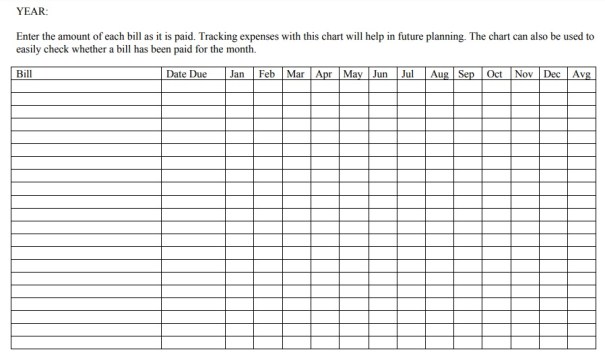
Have a bill paying system to ensure that bills are paid on time.

UncleBillsManager

Print Uncle Bill’s Bill Manager (pdf)

Make and follow a budget. Use a printable budget worksheet.

Set up files and make an important papers roadmap. Two helpful resources:

Choose a Financial Goal and use a chart to track your progress on saving money. Review net worth for a big picture view of finances.

Learn more about managing money at www.mymoney.gov, find financial tools at Mind Your Finances, and explore resources at USAA Educational Foundation. Online financial literacy course from Khan Academy.

Books and TED talks

Posted in goals

Six Tips to be a Winner

From How You Can Win At Anything in USA Weekend:

  1. Focus on the task at hand.
  2. Pay attention to detail.
  3. Make friends wherever you can.
  4. Free your mind and the rest will follow.
  5. Never give up.
  6. Be yourself, no matter what.
Posted in goals, personal development

10 Minutes 10 Questions for Goals

The 2010 Census tagline is the inspiration for time management questions and 10 questions for setting goals:

  1. In each life area, what will fill your life with value?
  2. Which area of your life has the lowest levels of value?
  3. What goal will be most effective in increasing the level of this value?
  4. How can this goal be stated in SMART terms?
  5. What is the most important action to take to reach this goal?
  6. What are your talents?
  7. What is your purpose….how will you add value to life with your talents?
  8. Are your goals in line with your purpose?
  9. Do your words and actions support your goals and purpose?
  10. What action will you take today?

More questions to ask to think BIG at the Not So Big Life. Learn more at Asking the Right Questions.

Posted in goals

Make Today Matter by Brook Noel

The book “The Make Today Matter Makeover” by Brook Noel is filled with a variety of charts to help you plan for life.

Some are available  here:  Make Today Matter

Posted in personal development, productivity

Measuring Productivity

manage-measure

At the end of the day:

1) How many tasks on your to-do list were completed?

2) How much of your time was spent on important tasks that contribute to mission and goals? How much of your discretionary or free time was well spent? (measure with a time audit)

The Pareto Principle or 80/20 rule says that 80% of the output or results will come from 20% of the input or action. This principle, discovered by Italian economist Vilfredo Pareto, illustrates the importance of using the small amount of discretionary time available to maximize results. The majority of our time use goes toward maintenance, work duties, and repeating tasks. That’s why it’s so important to use the small percentage of remaining time effectively. Watch these two videos that explain the Pareto Principle: Brian Tracy, and Frank Borg. Check out the Pareto Principle Board at Pinterest.

pareto principle

pareto principle

3) How many of the tasks accomplished were in the Important/Not Urgent Quadrant of Stephen R Covey’s time management matrix? (Also known as the Eisenhower Matrix) Learn more about setting priorities. This video explains the Eisenhower Matrix.

time management matrix

time management matrix

4) How many of the tasks accomplished had a BIG impact and/or HIGH engagement? Learn more about the Effect Priority Matrix.

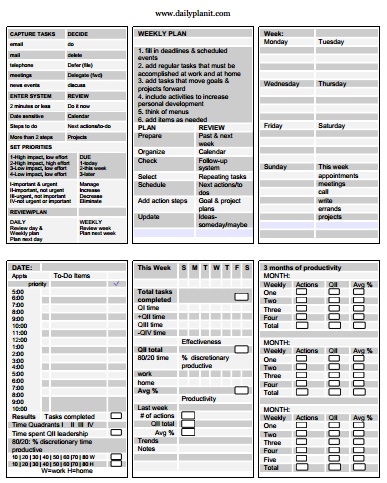
Measure productivity with daily and weekly scorecards to track 1) actions completed 2) time spent in important tasks of Quadrant II and 3) productive use of discretionary time. Followers of “Getting Things Done” (aka gtd) ideas or any other productivity system will enjoy this fun and easy way to track productivity. A method that could be used for adding notes is the slash/dot system proposed by Patrick Rhone.

Timeforms3x5

The goal of productivity is to…

DECREASE the amount of time spent on maintenance and repeating tasks, and INCREASE the amount of free time available to use in the way you choose. How? Use the Time Table to: Evaluate, Simplify, Be more efficient, Be more effective. Eliminate tasks that are not meaningful to you. Automate those that remain.

INCREASE the activities that ARE meaningful to you. There’s no point in increasing the amount of free time available, unless you use it well. How? 1. Be very aware of how you WANT to use it. Clarify how you want to add value. 2. Be very aware of how you ARE using it. Focus on how you want to add value.

See Also: How to tame Time Wasters: Time Wasters and Solutions and Optimize Your Day with the Science of Productivity More about metrics at Making Goals Specific and Measurable, and An Annual Review.

Learn more: A simple recipe to measure productivity from Stacey Barr, The Pareto (80/20) Principle at Better Explained, and How to 80/20 Your Life from Mark Manson

Posted in goals

Foldable Goals

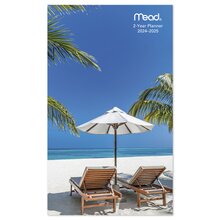
Another option for a paper task managment system is a simple Mead Pocket Planner with foldable goals tucked inside the front pocket, and foldable productivity information tucked inside the back pocket.

I discovered that one of my favorite tools, plastic project files, could be cut down to 3×5 size to make protectors for the system, three from one project pocket. Here are the plastic project files at Office Depot. They are just the right flexibility and strength to work well. (Pocket protectors could work too.)

I was inspired by the clever PocketMod to create templates with six areas (somewhat close to 3×5 size) to print on 8.5 x 11 paper.

Downloads to create Foldable Goals. Find ideas for goals in 12 life areas.

Read more about the portable gtd mini system.

Posted in goals, productivity

Retirement RX

In the book “Retirement RX: The Retirement Docs’ Proven Prescription for Living a Happy, Fulfilling Rest of Your Life,” Dr. Fritz Fraunfelder and Dr. Jim Gilbaugh share the results of their study of those who make the transition to retirement successfully. (Affiliate link: I receive a small commission at no additional cost to you if you click through and make a purchase with an affiliate link. Thank you for your support!)

The most satisfied retirees all share eight key traits. While planning for financial security is an element, “highly successful retirees” also plan for happy relationships, intellectual stimulation, enjoyable and fulfilling activities, and a healthy lifestyle. To suddenly have a lot of time on your hands and no idea of how to happily fill it is not a good position to be in. Here are the eight traits of highly successful retirees:

1. Plan ahead. Advance preparation is essential, not only for finances, but also for how your time will be spent. There is no better time to think about how to best spend your time for achieving life goals, contributing to society, and enjoying leisure activities. If you’re part of a couple, this also involves consulting and coordinating with your mate.

2. Maintain a positive attitude. Choose an optimistic outlook and be open to possibilities. Changing a negative mindset isn’t easy, but it can be done. Take time for appreciation each day, have goals, and stay curious.

3. Accept change. Realize that challenges are a part of life as we age, and adjustments will be needed. It’s always good to have contingency plans.

4. Develop a strong support group of family and friends. Lay the foundation now by maintaining current relationships and making new friends. In this chapter, the doctors talk about the circles of support around us. The inner circle includes your closest relationships, often your mate, children and close friends. Around that is an intermediate circle of other friends and family. Next is an outer circle of acquaintances from groups and organizations. And finally, a peripheral circle is made up of doctors, dentist, financial advisor, and others who are a part of our maintenance system. See levels of relationships at Cultivating Relationships.

People will come and go from these circles. When we retire, we lose the interactions with co-workers, and our social world often narrows. Make the effort to try new activities where you can meet others, volunteer, or join a group that interests you.

5. Engage in enjoyable leisure activities. Make a list of ten or more activities you enjoy doing or would like to try. Note those that are done alone or with others, whether they are indoors or outdoors, active or passive, expensive or free. Make these a regular part of your life. Keep your eyes open for new ideas.

6. Follow a healthy lifestyle. You know the drill: watch your diet, exercise regularly, quit smoking, etc.

7. Have a sense of purpose. If your purpose is not clear to you, here is a way to find clues: List different life areas (such as physical, mental, emotional, and spiritual) and ask “What will fill my life with value in this area?” Choose a few values that you are most passionate about and plan specific steps to increase them. Also think of actions you can take with your talents and skills to contribute to the world and add value to life.

8. Enjoy expression of spirituality in some form. Embrace spirituality with activities that deepen it, join or expand participation with a church community.

The advice in this book is actually helpful for anyone to follow, working or not! But if retirement is in your future, a good way to prepare for it is to follow this prescription.


Posted in Books, personal development
eBooks

Enter your email address to follow this blog and receive notifications of new posts by email.

Archives
Blog Stats
  • 742,849 hits