The facts do not lie…wearing a seatbelt greatly improves the chance of living through a car accident. Still, some people resist wearing a seatbelt when driving.
I know seeing my nephew in the hospital after his car accident had an immediate effect on my seatbelt behavior, and I have made it a habit to always buckle up since then. He sustained a major head injury, and I didn’t know if he was going to make it. I’ll never forget how he looked lying there, his face so injured and swollen, tubes everywhere. I was so scared that we might lose him. It took some time, but thankfully he did recover.
My nephew’s car after the accident
The following scenes from three movies I love are of car crashes that also had an emotional impact on me. I love movies that connect with our emotions in a powerful way, and these definitely do that.
The car crash scene from the movie “Adaptation” shows how quickly an accident can happen.
After the car crash in the opening scene of the movie “The Lookout” the character played by Joseph Gordon-Levitt will never be the same again.
The author starts out strong with engaging stories that describe how the relationships he developed helped him to overcome a learning disability and become a leader. However, by the time I reached the middle of the book I was worn out by the level of connection and amount of networking involved. The author is connected to many well-known people, and my thoughts turned to discouragement that this was way more than the average person could ever expect to manage. One review on Amazon describes Tommy Spaulding’s approach as “extroversion on steroids,” and after awhile introverts like me will likely begin to find the ideas daunting. Yet, there is useful information that can be employed on a smaller scale and I’m glad I read the book.
The Five Floors of Relationships
The author’s model of understanding relationships is retrofitted from the five levels of communication commonly studied in communication theory. Relationships range from the basic transactions of the First Floor to the high level of Fifth Floor relationships.
The Back of the Business Card
The book shows how to build relationships beyond the basic information that is on the front of a business card. Think about turning the business card over to the back and filling in the blanks by discovering more about a person’s interests with observation, questions, and listening. He coins the term netgiving rather than networking for a focus on what we can give rather than what we can get in our interactions with others. Many of the articles I’ve read about networking also recommend this approach.
Nine Key Traits are helpful in achieving real relationships: authenticity, humility, empathy, confidentiality, vulnerability, curiosity, generosity, humor, and gratitude. With short chapters on each of these traits, the author shows how many of the traits can be developed.
There is a need for information about how to develop relationships, and this book provides insights beyond Dale Carnegie’s classic book “How to Win Friends and Influence People.”
…and the secret reason for it. Why Soft Skills are Lacking and What You Can Do About It.
Soft Skills are Lacking
Studies often show a gap between skills desired by employers and skills that workers possess, with soft skills often lacking. Some studies show 60% of employers think applicants are lacking communication, critical thinking, creativity, collaboration and other soft skills. A Time article about the soft skills gap.
The Secret Reason: Why is there a lack of soft skills in the workforce? We aren’t teaching them!
Take a look the top 10 skills employers want. As I worked on this series of posts with links to resources to learn the skills, it became painfully obvious to me that:
1) there aren’t enough of these resources.
2) there is a large gap between what employers want and what is taught.
The Bad News
Many of the top 10 skills employers want are not often taught in traditional education.
Were you taught goal setting and time management in school? Did you have a class in communication, understanding emotions and problem solving? You may have learned a little about these things along the way, but these skills are rarely purposely taught.
And not only are these skills important to employers, many are critical to success in other areas of our life…and they usually aren’t being taught.
That really doesn’t make sense to me.
We say we need workers with these skills, that we need to increase employment, but we don’t take the steps needed to make it happen.
Why Aren’t Soft Skills Taught? Teaching soft skills may not be easy…but it can and should be done.
The Good News
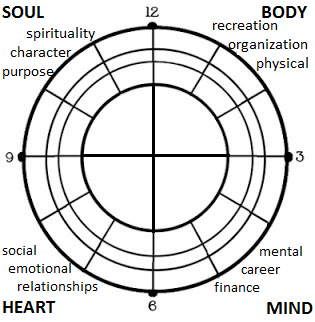
Can you imagine a world full of people living at maximum potential? Life is so much better when people know what their talents are and how they want to use them, do work they love, earn the money they need, communicate well, understand and manage emotions, have strong relationships and friendships, develop physical strength and energy, connect with spiritual beliefs, develop character, and set goals and manage time effectively.
I believe these skills can be learned and developed for an optimal life and a better world.
Engagement at Work
Gallup surveys frequently show low levels of engagement at work. Will increased skills contribute to higher engagement? I believe it will.
What You Can Do About It
If you believe this too and want to get involved, you may want to connect with others interested in personal development by forming your own Whole Life Fitness group. Consider setting work goals, selecting learning activities for a personal development plan, and developing work skills.
The ability to sell or influence others is the number ten skill on the list of top ten skills employers are looking for. Selling is something we all must do at times, whether we are at a job interview, networking, or pitching an idea to a supervisor, investor, or customer. It involves communicating clearly who you are, what you want to do and why in a captivating way. (Learn more at the Brand and Purpose Toolkit)
Plan, practice, and peform with passion. Remember the ABCDs of presentations:
Ask what the audience needs to believe so they will want to do the desired action. Watch Tim Pollard TED talk, see below.
Beware bullet points: use good images, limit words, one key message per slide – See Who Moved My Brain slide show by Merlin Mann (and see it in action here).
Contrast current reality with a vision of transformation. Watch Nancy Duarte TED Talk, see below.
Don’t die by Powerpoint. Watch David JP Phillips TED talk, see below.
The ability to tell a story is an important part of communicating a message. Check out Entrepreneurial Selling with Craig Wortman at Kauffman Founders School.
“Selling is convincing other people of the benefits of working directly with YOU.”
All of the successful business owners they interviewed feel that the ability to sell themselves, their ideas, and what they have to offer is the one skill that most contributes to their success. The resources in this post can help you learn and develop these skills. Find more TED talks by speakers who are also authors at TED Talk book discussion.
The authors are partners in KNP Communications, a firm specializing in presentation coaching and communications strategy for corporate and political clients. They conclude that people who are the most effective at influencing others possess the ability to project both strength and warmth, a task that can be difficult. Communicating these two qualities can be at odds, and those who are compelling can swiftly switch between them.
Strength=competence, confidence, mastery
Warmth=likeability, interest, belonging
Strength and warmth can only be conveyed if they are genuine. This book shows how we can remove obstacles that prevent us from 1)being aware of strength and warmth and 2)expressing them well. We can improve how we connect with emotions and align our actions for authentic expression of them.
Body language plays a large role, and posture is key in projecting strength. Standing tall is often half the battle. Prior to situations where we wish to project strength, we can stretch up and out. The TED Talk by Amy Cuddy: Your body language shapes who you are describes how this works.
A smile with flinty eyes conveys strength, and a smile with a twinkle in the eyes conveys warmth. Strength and warmth are energies, and to better convey them we can psych up our energy level by connecting with memories that remind us of a time we felt strong and warm. We can play or think of music that evokes those feelings. We can learn from watching others who excel at this and notice their body language, voice and message.
In presentations stories naturally project strength and warmth together. Stories work best when they feature people doing and feeling things, moral dilemmas, good and bad characters. When done well, humor can also be helpful.
The best way to be our own coach and improve is to record our efforts while practicing.
When we connect and express our strength and warmth, we become compelling to ourselves and to others too.
It is a basic economic principle that the benefit or value of a product or service must exceed the resources required to obtain it in order for it to be chosen. In other words, if we think the price is too high for the perceived value, we aren’t going to buy it, regardless of what is exchanged in order to get it. Another principle is that choices have intended and unintended consequences which lie in the future. Let’s consider these principles as applied to the goal setting process to gain insight into the choices we make.
A couple of things have come my way recently that have made me stop and say…
“Wait, What? Pain is involved?”
The motivational video “Why Do We Fall” says “It’s not about how hard you get hit, it’s about how hard you get hit and keep moving forward.”
This quote from Prolific Living says “It will hurt. It will take time and dedication and willpower. It will require sacrifice. There will be temptation (to quit) but when you reach your goal, it will have been worth it. So don’t quit. Don’t fuss or whine or complain. Just Keep Hustling.”
Humans do their best to avoid pain, and seek pleasure. Yet reaching goals can require us to embrace temporary pain in pursuit of the long-term pleasure of accomplishing the goal. We have to believe it is worth it, or we will likely give up when we encounter hardships and obstacles. To achieve the satisfaction that comes from a job well done means developing agency. To contribute and to excel means going above and beyond to challenge yourself.
In Freudian psychology, the pleasure principle is the instinctual seeking of pleasure and avoiding of pain in order to satisfy biological and psychological needs. But to achieve success in some endeavors like sports, pain can be a part of the process to reach the goal. It takes strength to take on that kind of challenge. It takes the ability to delay gratification and keep focused on the long term result.
Anything worth doing takes effort. By definition, reaching for a goal is not going to be easy. When you know what you want to do, and how to do it, you must want it enough to commit to it. And that often means getting up and out of your comfort zone. I need to remember this to get me going above and beyond the path of least resistance. It reminds me of the scene in the movie “Stand and Deliver” based on the true story of teacher Jaime Escalante where he tells his students, “you’ve got to have the desire!” …enough desire to get you past inertia and over the hurdles that stand between you and the goal. You’ve got to have the grit to keep going even when the going gets tough.
The benefit of a goal must exceed the resources required to obtain it.
I want to apply these thoughts to a couple of examples. The first one that comes to mind is working out. Working out requires a commitment of several resources. You have to take the time to get up and go do it. People often don’t view it as that pleasurable a thing to do. (At least, I don’t) It doesn’t have to cost money, but you might invest in a gym membership, a dvd, or equipment. It’s just much easier not to do it. Even though I knew I could gain strength, lose weight, and probably look better, it wasn’t enough to overcome inertia. My husband did something that tipped the scales in favor of my perceived value of working out. He described with great enthusiasm how aerobic exercise works. He promised me I would gain more energy and feel better by making the effort to work out. And I wanted that enough to commit to the goal. I probably would not have made the investment of resources to commit to this goal if not for being educated by him about the value of it. When I clearly saw all of the pros, their significance grew to outweigh the cons. The benefits of working out tipped the balance, becoming greater than the cost of achieving it. I now focus on how good I feel when I work out, and not on the time and effort it takes.
Another example is starting your own business. The costs are substantial: investing in acquiring the skills needed, investment of time, money and hard work, taking a risk. The benefits can also be great: independence, challenge, and hopefully, financial success. It’s an undertaking only chosen by those who believe the benefits outweigh the cost of the goal.
To make intelligent choices, we need to be educated about the true value and the cost of goals, and the long term effects of choosing them, or not. We can use this knowledge to tip the scales in favor of a goal, to make us willing to tackle the costs, the pain, the effort it is going to take, and make good decisions about the choices we make.
There have been several loud rings on my Wake Up Call telephone this week! The above quote really spoke to me, and the following articles just may be enough of a prod to get me to stretch a bit beyond my comfort zone. There are some things I’ve thought about trying, but to be honest, it’s been easier to not expend the effort they would require. To start down the path I truly desire, a path of my chosen direction, will require turning my back on that much easier path: the path of least resistance. Once you know what you want to do, and how to do it, you must commit to it. You must listen to the wake up calls and not the excuses!
A good place to start is with basic knowledge of Microsoft Office programs like MS Word.
Goodwill Community Foundation’s website, gcflearnfree.org, is an awesome free resource for learning Microsoft software programs (plus computer basics, typing, and a lot more.)
A charged life is a consciously designed existence that feels evenly engaged, energized, and enthusiastic.
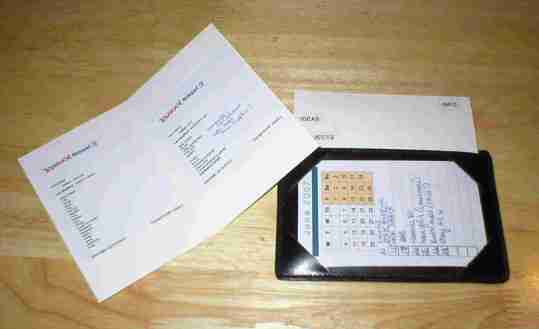
Brendon describes three activators for each of five baseline drives, and five forward drives. He provides free resources at http://www.thechargebook.com/resources-downloads, including a one page productivity planner. He discusses using this tool to Control Workflow in the chapter on the Baseline Drive of Control. There are three parts to this form:
Top 3 projects and 3-5 biggest moves to make them happen.
People to contact today: a)waiting on a decision/information or b)need to share a decision/information.
Things that must be accomplished today.
Brendon’s advice to Control Workflow:
Begin with People, checking for and responding to only emails for those that fit the criteria. Then, close email and don’t check it again until the last hour of the day.
Next Produce by working on the priorities at the bottom of the page. If you finish those, ask “is there anything else I can do right now to move one of my big projects forward even faster and more effectively?”
His system requires self-discipline to avoid distractions! Ironically, as I checked for a summary of the book, I found a website so interesting I found myself spending a lot of time exploring it. Here is the summary of “The Charge” at sourcesofinsight.com.
This is just one of many ideas I got from this book. It provides a great framework to create a dashboard for a visual check of how you’re doing in personal development, and has made me aware of areas to improve and ways to create a more fully charged life.
Free Printable Charge Dashboard based on the book “The Charge” by Brendon Burchard. (pdf)