Action Steps

ProjectPlan

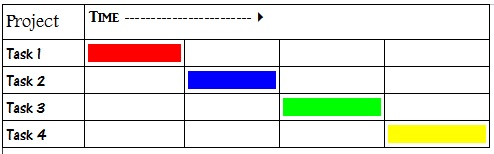
I’ve always struggled with breaking goals down into specific action steps. Instead I often have a general idea and just keep “working on it.” The key breakthrough for me was when I read a book called “Woulda, Coulda, Shoulda” by Arthur M Freeman that really isn’t about setting goals or time management at all. It just goes to show: you can look in all the logical places, but you just never know where you’re going to find the information you need. It’s all about pasta! 🙂 The steps involved in making pasta you would not believe!

motivationalwaterbottle

A motivational water bottle like this one from uncommon goods is a great way to see a goal broken down into smaller steps.

I’ll use another example here.

Example goal with action steps

Goal: I will get organized by setting up files for paperwork and filing incoming papers every day.

  1. Buy filing cabinet and files
  2. Label files
  3. Arrange files

That’s a good start, now think in more detail:

  1. Go to the office supply store after work tomorrow.
  2. Find the section with filing supplies.
  3. Decide what kind of system I want.
  4. Buy supplies.
  5. Decide where I want to set up files.
  6. Take supplies to the area I chose.
  7. Set up file cabinet.
  8. Fill cabinet with file folders.
  9. Decide on headings and color codings to use.
  10. Make label for each file. (Oops! out of label tape-go back to the store.)
  11. Put files in proper order.
  12. Put papers in the proper folders.
  13. Locate paper retention guidelines.
  14. Purge un-needed papers.
  15. Shred purged papers that include personal information.
  16. Maintain system by filing incoming papers daily.
  17. Review and purge files in February each year.

Wow! That was a lot more involved than I thought at first. No wonder I kept putting off this project! When you think about the action steps involved, it becomes more manageable. Rather than attempting to do it all at once, the different steps can be scheduled into your calendar. This is a part of weekly planning.

To determine action steps, ask: What projects will accomplish this goal? What actions will accomplish the project? What can be done today? First list action steps without worrying about the order. Evaluate the first list, add more detail and then prioritize. For each step, estimate the time for completion, set a target date, and select a mini reward.

In Getting Things Done (see GTD essentials), David Allen David Allen defines a next action as “the next physical, visible activity that would move something toward completion.” Some helpful next action and project verbs.

Habits taken down to the smallest, simplest actions are more likely to be established. Try some micro-habits for personal development.

Another example: perhaps you want to create simplicity in the life area of organization by decluttering. Decluttering is a big goal that needs to be broken down into smaller steps with a decluttering checklist.

PREPARE for next actions:

• Plan smaller actions to take
• Realign priorities
• Explore options
• Pursue purpose
• Act efficiently
• Reserve time in schedule
• Experiment with strategies

Learn more about Next Actions

Read more about setting up files.

Tagged with:
Posted in goals, productivity

My Ideal Time Management System

I’ve been so impressed by the forms generated by David Seah on his Printable CEO blog. With his wonderful imagination he brings fun and a sense of play to time management. His concrete goals tracker is geared to his field, but the point system could be modified for regular people with a combination of ideas for setting priorities from Stephen R Covey’s time management matrix and Julie Morgenstern’s Return on Investment ideas from her book “Making Work Work.” The result might look something like this:

10-High Return on Investment
10-Deadline Due Today

5-Contributes to goals
5-Few Steps to Results
5-Few Resources Needed

2-Necessity
2-Planning
2-Relationships

When I bounced the idea off David, he made a good case for leaving negativity out of it! (as in losing points for wasting time) I also like the idea of keeping a daily progress chart with different colors for the top goal in six life areas, then combining the totals into a weekly score card. Somehow, we need to get credit for the things we hafta do on a regular basis. It would be good to have a visual representation of a reward that we get upon completion of a goal or when we earn a certain amount of points.

Here’s my dream for an ideal time management system. It would have customizable databases where you could input your repeating tasks and work duties which you could then click and drag to your to-do list. It would incorporate menu selection for the week which would then generate a grocery list. Of course action items for projects and goals would be included. There would be a pull-down menu to select rewards from, and one to set priority levels to gain points with. It would calculate points earned and tasks that would fit available time. Meetings and appointments from the calendar and reminders of due dates and birthdays along with actions for self-development would seamlessly flow into the system with everything else. Emails that are incoming tasks could be dragged into the appropriate project folder and associated with a date due. For ease of entry, it needs to have voice recognition like in Star Trek. And it needs to sync to a PDA for portability.

What else can you dream up? And who is willing to make this for me?!

Posted in goals, productivity

Searching for Answers

HiddenGem

You know how sometimes you may be about ready to give up and someone gives you a word of encouragement that keeps you going? A big Thank You to Chris Brogan for writing the post about the Daily PlanIt at Lifehack.org! Now the pressure is really on to keep coming up with ideas! I’m reminded of the moment in the movie “Joy Luck Club” when the mother tells the daughter, “I see you.” That’s an important part of love, to really see and be seen. I feel loved today!

loved

I guess it’s time to come forth and share a little more information about me. I’m a pretty private person, but it is important to be your authentic self. Like many of us, I’ve been through some struggles in life, and have searched for answers along the way. I’ve learned from psychology and personal development as well being interested in goal setting and productivity.

I’m encouraged when Dr. Phil McGraw says that we do not have to be defined by our past. That leads us back to change, and it ain’t easy. But is the alternative working for you? A definition of insanity is doing the same thing and expecting different results. But so many times we keep trying anyway, because we don’t know any other way to do it. That’s why Steve Pavlina is so helpful as he focuses on awareness and choosing love over fear.

You know how sometimes you just happen on to the thing that you need to see or hear? When I was cruising at Lifehack.org I discovered Phil Gerbyshak’s Make It Great site and he’s an incredibly positive person with awesome things to say! Now I need to re-title my article Top Ten Eleven Time and Life Management Blogs. 🙂 My hope is that you can find something that you need to see or hear on The Daily PlanIt.

Posted in personal development

Discover U in Ten Steps

Whether you are searching for a career, want to cultivate a strong relationship, or are wondering what you want to do with your life, there is one place you have to start. You have to know who you are. And that may not be an easy task.

To get started, download and print a Discover U Self Assessment form. Forms at Sources of Strengths outline details and capture strengths identified by many assessments. Then explore the links to online tools below and write your results on the form. (find even more tools at the Discover U Toolkit at Wakelet or via Google.) Find book and TED talks at the Psychology Pathway. The posts below provide more information about each topic.

The key areas to explore are listed below with definitions and links to an online resource (or two) for assessment. The original Ten Steps to Discover U posts come after these. The order in which you explore these areas is not that important. Your strengths are very helpful to know as they help in choosing direction and priorities. They can include your innate talents and learned skills. Identifying values and personal qualities is fairly easy so can be a good place to start. Finally, personality traits and interests can be helpful to know and can help to match with a compatible career.

• STRENGTHS – developed abilities
-Red Bull Wingfinder: 25 strengths in 4 areas (Creativity, Thinking, Drive, Connections) www.wingfinder.com
-Clifton Strengthsfinder: 34 strengths in 4 domains (Executing, Influencing, Relationship Building, Strategic Thinking) $ There is a fee for this assessment. https://www.gallup.com/cliftonstrengths/
• TALENTS – innate or natural abilities
Howard Gardners multiple intelligences (Linguistic, Logical/Mathematical, Spatial, Bodily-Kinesthetic, Musical, Interpersonal, Intrapersonal, Naturalist) www.literacynet.org/mi/assessment/findyourstrengths.html
• SKILLS – learned abilities (see also the Work Skills Toolkit and Skills Employers Want) https://www.careeronestop.org/ExploreCareers/Assessments/skills.aspx
-Secretaries Commission on Achieving Necessary Skills, SCANS https://cctstfolio.com/#/unit-3/lesson-2/scans-skills-assessment
• INTERESTS – activities you enjoy
Holland Codes (Realistic, Investigative, Artistic, Social, Enterprising and Conventional) https://www.truity.com/test/holland-code-career-test
• PERSONAL QUALITIES – positive character strengths. VIA (24 character strengths) survey at www.viacharacter.org/
• VALUESguiding principles. Online or printable card sort at www.thegoodproject.org/value-sort
• PERSONALITY – tendencies toward personality types or traits
-Myers-Briggs (Extrovert – Introvert: How you gain energy, Judging – Perceiving: How you organize, Thinking – Feeling: How you make decisions, Sensing – Intuition (N): How you view information. 16 Personalities
-DISC (Dominance, Influence, Steadiness, and Conscientiousness) www.truity.com/test/disc-personality-test

• PURPOSEreason for being. One clue to purpose is the experience of flow or being so involved in something that you lose all track of time: try the Flow test at Psychology Today. Emily Esfahani Smith, provides a quiz What’s Your Pillar of Meaning? at her website. Start with your strengths to fill out the Ikigai Pathway to Purpose worksheet.

Focus your soul attention with a personal mission statement (sometimes called a unique selling proposition) that pinpoints what you do and why. This value statement is about the value you add based on what you value.

Purpose Planning describes the process of seeking a mission and vision based on values and setting goals. You can then prioritize VIP AIMS: very important pursuits that are active, inspiring, meaningful solutions with high impact.

Once you know your values, interests, and strengths, you can find causes you believe in to volunteer.

The original posts in the Discover U series:

  1. Discover your heroes
  2. Identify your strengths
  3. Explore your skills
  4. Examine your beliefs
  5. Look at your values
  6. Develop a mission statement
  7. Learn about your personality and interests
  8. Think about your talents and goals
  9. Tell your story
  10. Express yourself

Discovering you is not just about where you live or what you do for a living. It’s not just about your favorite tv shows and favorite color. It’s not just about the roles that you play like parent or child. It’s about discovering your voice and learning how to speak your truth with it. It’s about getting in touch with the real you – your authentic self.

Find more resources at the Brand and Purpose Toolkit and in the free ebook How to Start a Fire.

Posted in Discover U, goals

Express Yourself

Express Yourself is Part Ten of Ten Steps to Discover U. You know who you are, now is the time to be the real you. Who can hear your voice if you do not speak your truth? Who can see what you write if you do not show them? If you love someone but are never able communicate it in a way they can receive it, does it exist? I believe we only get one chance at this, and do we really want to stumble around worrying about what others think of us, never feeling comfortable being ourselves?

When I assembled a list of my top ten blogs on time and life management, I began thinking. What do I have to offer that is different from what is already being done? DIYPlanner does a great job of ideas for paper planning. David Seah has tremendously creative ideas for paper productivity too. For Getting Things Done followers, there’s Matt’s Idea Blog and What’s the Next Action. Black Belt Productivity does great interviews already. Lifehack has a community of folks that share information.

Sometimes I feel like I’m just talking to myself, and what good is that? Actually, I guess at times that’s ok! 🙂 But on the other hand, if I’m not reaching others with my message, I’ve failed in my goal of sharing information about goal setting and time management.

What is my purpose, my unique contribution? I think for me the focus on helping people set goals is important, and along with that is helping people learn who they are and become who they want to be, to do what they want to do. I will include more information about skills that help us in work and in life. So that is my unique contribution.

Many of the greatest truths have some paradox in them. It is only in accepting ourselves as we are that it is possible to change. Since no one is perfect, there are often things we would like to change. The only thing we can change is ourselves, and even that does not come easy. The next step is to grow into the person you want to become.

present

Love is a gift freely given, the only way to keep it is to give it away. Life is also a gift, that’s why they call it the present. What we give is what we get back. The greatest gift you can give is the gift of being yourself. The more fully you express yourself, the greater your experience of life becomes.

Posted in Discover U, goals, personal development

Tell Your Story

Tell Your Story is Part Nine of Ten Steps to Discover U.

storytelling-C

Storytelling is a powerful way to communicate. A well told story can capture attention, connect us with others, and shape behavior. To identify a personal brand is to know yourself so you can always be communicating the value of you – who you are, what you provide, the benefits of working with you. Share the knowledge you gain from self assessment with the Discover U series in a story.

  • Grab interest with novelty, practical information, and emotional content.
  • AIM at the heart.
  • Build in desire with the value to them. Go straight to meeting needs.
  • Ask for what you want in a call to action.

Travel back in time to write the history of your life. For some, this can be a fun exercise. For others painful memories may be resurrected. But whatever our past has been, a look back can help us to move forward.

How to Tell Your Story of Self at billmoyers.com

  1. Challenge – what challenges have you faced?
  2. Choice – what did you do?
  3. Outcome – what was the result? how did you change?

Study the art of storytelling: Links at the Storytelling pinterest board.

Discover U in Ten Steps

  1. Discover your heroes
  2. Identify your strengths
  3. Explore your skills
  4. Examine your beliefs
  5. Look at your values
  6. Develop a mission statement
  7. Learn about your personality and interests
  8. Think about your talents and goals
  9. Tell your story
  10. Express yourself

Personal Development Toolkit at Resources

Posted in Discover U, goals, personal development

The Sweet Spot

A brief break from the Discover U series to mention a book I’ve been reading called “Cure for the Common Life” by Max Lucado. Read your life backwards, he says, to find those moments where satisfaction intersects success. Look for your STORY: Strengths, Topics, Optimal conditions, Relationships, and Yes.

Posted in goals, personal development

Think About Your Talents and Goals

Think About Your Talents and Goals – Part Eight of Ten Steps to Discover U.

To set meaningful goals, explore clues to purpose and uncover hidden talents.

talents

Talents are natural abilities that come easily to you and allow you to use your strengths. Strengths are activites that require effort and give you strength when you engage in them. Your strengths may include talents, skills you’ve learned, and personal qualities or character strengths that are important to you. One way to identify talents is to notice what you are doing when you are so involved in something you lose all track of time. This is the flow state, and it is a good indicator of talent.

Aristotle said: “Where the needs of the world and your talents cross, there lies your vocation.” To add value with your talents, look for the place where your talents and what the world needs intersects. Ikigai is the reason you get up in the morning, and it is about finding this intersection.

Uncover hidden talents and learn more about Ikigai at the Purpose Pinterest Board. Explore resources at the Brand and Purpose Toolkit.

Set meaningful goals that make the most of your talents. Learn more with a free guide to setting goals and resources at the Goal Toolkit.

Continue to Discover U with Part Nine – Tell Your Story, and explore weekly activities for personal growth.

Discover U in Ten Steps

  1. Discover your heroes
  2. Identify your strengths
  3. Explore your skills
  4. Examine your beliefs
  5. Look at your values
  6. Develop a mission statement
  7. Learn about your personality and interests
  8. Think about your talents and goals
  9. Tell your story
  10. Express yourself

Brand and Purpose Toolkit at Resources

Posted in Discover U, goals, personal development

Learn About Your Personality and Interests

Learn About Your Personality and Interests is Part Seven of Discover U in Ten Steps and part of a self-assessment to uncover hidden talents. Find a free printable self-assessment form at the Brand and Purpose Toolkit.

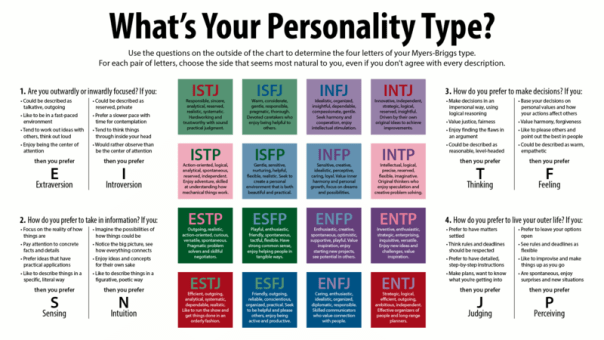
MyersBriggsTypes

By Jake Beech – Own work, CC BY-SA 3.0, https://commons.wikimedia.org/w/index.php?curid=30859659

When you explore personality types and interests you can gain insight into yourself and others, and match with a compatible career choice.

PERSONALITY-tendencies toward personality type or trait.

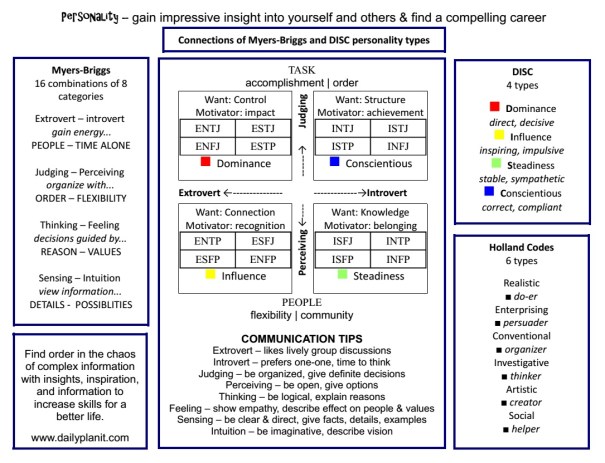
The chart below explores the connection between Myers-Briggs and DISC personality types.

Personality

Download a free printable pdf with information about MyersBriggs and DISC

More options to explore personality include:

INTERESTS are activities that you enjoy. What kind of articles and books do you like to read? What’s in your computer files and bookmarks? What apps are on your cellphone? These things indicate your interests.

  • John Holland’s personality types reveal interests. They are: Realistic, Investigative, Artistic, Social, Enterprising, Conventional. A graphic that combines Holland Codes with Myers-Briggs is at personalityjunkie.
  • Holland Code Pinterest Board
  • Holland Code Type – Assessment at CareerOneStop, and Quiz at roguecc.edu

Find careers that are a good match for Myers-Briggs types and career clusters that match your Holland Code type.

This is part of a self-assessment to uncover hidden talents.

Discover U in Ten Steps

  1. Discover your heroes
  2. Identify your strengths
  3. Explore your skills
  4. Examine your beliefs
  5. Look at your values
  6. Develop a mission statement
  7. Learn about your personality and interests
  8. Think about your talents and dreams
  9. Tell your story
  10. Express yourself

Brand and Purpose Toolkit at Resources

Tagged with:
Posted in Discover U, goals, personal development

Develop a Mission Statement

Develop a Mission Statement is Part Six of Ten Steps to Discover U.

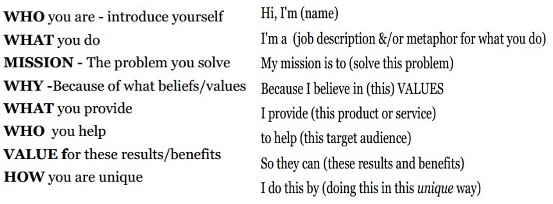
valuestatement

A mission statement describes your purpose and the path you plan to take. Mission statements are brief, focused, flexible, and feasible. They include how you will add value, based on your values. That’s why I like to call them value statements. Find a form to create a value statement at Your Unique Selling Proposition, and more resources at the Value Statement Pinterest Board and Brand and Purpose Toolkit. This is also a part of Purpose Planning.

More Resources

Discover U in Ten Steps

  1. Discover your heroes
  2. Identify your strengths
  3. Explore your skills
  4. Examine your beliefs
  5. Look at your values
  6. Develop a mission statement
  7. Learn about your personality and interests
  8. Think about your talents and goals
  9. Tell your story
  10. Express yourself

Brand and Purpose Toolkit at Resources

Tagged with:
Posted in Discover U, goals, personal development
eBooks

Enter your email address to follow this blog and receive notifications of new posts by email.

Archives
Blog Stats
  • 742,934 hits