Make healthy food choices and track diet

Physical – Activity: Make healthy food choices and track diet

Learn how to follow a healthy diet. Research some of the top diet plans at healthline.com and today.com. Read about the Blue Zones Diet and the MIND Diet.

Dive into learning with the book “Prediabetes: a complete guide” by Jill Weisenberger.

Invest in a good cookbook with healthy recipes.

Explore the grocery store with a Hy-vee nutritionist tour. Learn to read food labels, and shop the perimeter, where fresh meat, produce, and dairy are often arranged. Eat more fruits & veggies.

Track your food intake with an app like Lose It!, Myfitnesspal or a form. It’s been clinically proven that keeping track of what you eat is the #1 most effective method for controlling and reducing your daily caloric intake. Those who keep a diet diary lose twice as much weight.

FORMS: a printable food and fitness journal from WebMD

FoodDiary

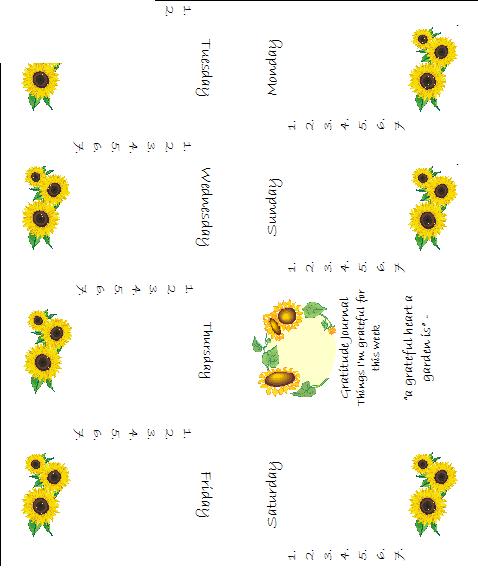
Mine: Foldable Food Diary (pdf) with 6 forms per page, close to 3 x5 size

Learn more about healthy nutrition and make healthy food choices.

I use the resources in my eBook “Simply Dinner: the Game Plan” to organize my recipes and plan meals. Check out Simply Dinner: the Game Plan! It has a blank recipe card template with four 3×5 cards on one page. Not to mention enough recipes designed for a low-carbohydrate diet for a month of menus. There are no fancy ingredients here, and please note they are not vegetarian.

see also Food is a Four Letter Word, Organizing Recipes, and a customizable shopping list at Learning About a Low Carb Diet.

The goal for this week:

“I will make healthy food choices by planning a healthy menu for the week on Sunday morning for this week. I will track the nutrition of the food I eat this week with a food diary.”

This is one of the weekly activities for a Year of Personal Development.

Posted in Year of Personal Growth

Goal Skills – Problem Solving

Not all projects are problems, but all problems are projects. The trouble with problems is they look like projects, and then sit there on your list thumbing their noses at you while you can’t figure out why they aren’t getting done. The fact is, you’ll do just about anything to avoid doing them or thinking about them. Because you’re stuck. There is something preventing you from moving forward.

At some point you realize that there is a problem with the project. And you have to take a closer look at exactly where you are hung up and why. It may take some brainstorming to come up with alternate creative solutions to get around the problem. Stop avoiding a problem and take time to focus and look for solutions. Remember, problem solving is decision making.

We must expect to encounter obstacles along the path to our goals. When this happens, it’s time to think of ways to solve the problem, to pivot and recalculate the route to our destination. Sometimes the first step is to become aware that there is a problem and gain clarity.

  1. Identify the problem
  2. Define the problem.
  3. Gather information.
  4. Ask the opinions of others with experience.
  5. Generate ideas for possible solutions.
  6. Evaluate options, choose one and make a plan.
  7. Implement the plan.
  8. Evaluate success.

Look for SUCCESSful solutions:

Solve issues
Useful
Complete
Commit to measures
Engage interest
Smart
Simple
Follow a vision
Use skills
Leverage strengths

Additional Reading

see more Skills Employers are Looking For

Posted in goals

Choose and Schedule Regular Exercise

Physical – Activity: Choose & Schedule Regular Exercise

Benefits

It is well-known that exercise provides many benefits, both physical and mental.

ExerciseBenefits

Find simple ways to add exercise into your life.

1. Choose an exercise. Pick one you can enjoy and that will provide the effect you want. You may want to change routines for variety.

2. Decide on a time and place.

3. Identify obstacles: Do you need a dvd, workout clothes or equipment?

4. Decide how you will track your progress. Will you mark a calendar each time you exercise? Will you use a chart? Or an app like Myfitnesspal on your smartphone or tablet?

exercisechart

Daily PlanIt Exercise Chart: Foldable Exercise Chart (pdf) with 6 forms per page, close to 3 x 5 size) and Monthly chart for daily goals (pdf)

More Forms: Printable food diaries at Make healthy food choices and track diet

Your Mission:

I will choose an exercise and a regular time and place to do it. I will obtain whatever I need to make this happen and exercise at least three times this week.

Example:

I will alternate aerobic exercise with weight lifting every evening at 6:30pm for 30 minutes.

TOOLS:

This is one of the weekly activities for a Year of Personal Development.


Tagged with:
Posted in positive shift, Year of Personal Growth

Pareto Principle Illustrated

The Pareto Principle or 80/20 rule says that 80% of the output or results will come from 20% of the input or action. (see more at Measuring Productivity)

80-20-1

When this is applied to a typical day, you can expect that 80% of your time will be spent on maintenance, routine work duties, and repeating tasks. This leaves only 20% available for more important things like action steps toward goals, high Return on Investment tasks, ideas, and true relaxation. (Quadrant II of the time management matrix at Priorities) That is why it is critical to use that 20% of time that remains effectively.

Too often, the remaining 20% of the day looks like this:

80-20-3

Ineffective use of free time

80% of it is spent on time wasters: trivia, escape activities, mindless tv viewing. This is what ineffective time use looks like.

The goal of productivity is to use the amount of free time that is available to us to achieve the results we desire. That means using the remaining 20% of the day more like this:

80-20-2

Effective use of free time

80% of it is spent on the important things, and only 20% on time wasters. Remember to Make Today Count!

80-20rule

See also: Pareto Principle (or 80/20 Rule) at Asian Efficiency and How to 80/20 Your Life from Mark Manson.


Posted in productivity

Time Management Questions

Mental – Activity: Plan weekly and daily

Planning is Thinking – it is an important skill for setting goals and managing time, and it is one of the top 10 skills employers want. A Planner Checklist can help you plan your time to make the most of it. You may also want to do long term planning for mission, vision, and values at Purpose Planning.

First plan your week: choose a weekly plan form and take a few minutes to do a weekly review.

Then, plan your day: review your calendar and tasks, and use a to-do list. Remember to add incoming tasks to your system as they arrive.

SMART GOAL

I will [do what] plan weekly [how] during a weekly review [when] every Sunday morning [for how long] 10 minutes [measured by] an annual chart for weekly goals [by when] by target date of a year from today. I will [do what] plan daily every morning at 7am.

Take action to follow your plan.

Before you act, THINK:

  • T is it Thoughtful? Do you know why you want to do it? Is it something you have planned?
  • H is it High Impact? Will it provide great results? Help you or others?
  • I is it Important? Is it high priority? Is it inspiring?
  • N is it Necessary? Is it something that must be done? If it’s not necessary, can it be decreased or deleted?
  • K is it Kind? Is it something that will uplift yourself or others?

THINK

Without a plan, it is all too easy to get distracted by things that are not important. Stay focused and keep yourself on track with…

10 Minutes 10 Questions for Productivity

  1. What projects will accomplish goals?
  2. What actions will accomplish projects?
  3. What’s the next action required? (David Allen) …learn more at GTD Essentials
  4. Which actions are top priority?
  5. What is the best use of your time right now? (Alan Lakein)
  6. What activities am I not doing, that might help me reach goals if I did them? (Brian Tracy)
  7. What are your repeating work tasks?
  8. What are your repeating home tasks?
  9. What are your favorite menu plans?
  10. What are your favorite recreational activities?

With increased productivity we can more effectively use our time for positive shift and reaching goals. Learn more at 10 minutes 10 questions for goals and Asking the Right Questions.

This is one of the weekly activities for a Year of Personal Development.

Posted in productivity, Year of Personal Growth

Discovery of the Day

Check out 365 Thought Provoking Questions to Ask Yourself This Year at Marc and Angel Hack Life: Practical Tips for Productive Living. They also have many articles about Productivity.

Posted in goals, personal development, productivity

Goal Skills – Determination

Desire is the key to motivation, but it’s determination and commitment to an unrelenting pursuit of your goal – a commitment to excellence – that will enable you to attain the success you seek. -Mario Andretti

We must expect to encounter obstacles in our path as we reach for goals. Do you know the story behind the name of a very successful product called WD-40? It took 40 tries to get the water displacement formula correct.

Determination can require persistence, grit and the ability to delay gratification. The abilities to focus, use your strengths, and get motivated are helpful.

Consistent effort is critical in making progress. Small steps taken consistently get us to the place we want to go. “Empty Your Backpack” by Sam Demma, TED talk Small consistent actions. Steph Smith writes about How to be great? Just be good, repeatedly. Stay motivated with the video Consistency always wins.

Read more at The Wimpy Person’s Guide to Grit and The Economy of Goals.

Got inspiration? Watch the inspiring movie Rudy about a determined young man pursuing his dream in spite of many obstacles and set-backs. See 40 inspirational speeches in two minutes at the Angst Guide to Motivation.

Read more quotes on determination at brainyquote.com

Get more inspired with this song playlist after a hard, discouraging day:

What other movies and songs do you find uplifting?

Posted in goals

Time Management Skills

The Skills and Competencies category at Contemporary Management includes a 70 page Handbook on Time Management Skills (pdf) from the Centre for Good Governance.


Posted in productivity

Increase Productivity

Mental – Activity: Increase Productivity

This week, take an action a day to increase productivity:

  1. Start with the Top Ten Ways to Improve Productivity.
  2. Explore the Time Management 101 Tutorial.
  3. Watch videos at Learn About Productivity.
  4. Read about the Science of Productivity.
  5. Read about systems that productivity experts use at the Study of Productivity.
  6. Master Productivity with Productivity Levels.
  7. Check out one of my favorite books about productivity.

With increased productivity, we gain more time to dedicate to what is most important to us. We can make positive shift happen and reach for our goals!

This is one of the weekly activities for a Year of Personal Development.

Posted in Year of Personal Growth

Set Goals

Mental: Set Goals

Learn How to Set Goals, and choose a goal. Select a goal plan that will increase the level of value in life areas that are low.

Keep it SMART (Specific, Measurable, Achievable, Realistic, Time Sensitive) with wording created using this formula:

I will [do what] lose weight [how much] ____ lbs by doing [what] aerobic exercise [when] every morning [for how long] 30 minutes [measured by] target heart rate [by when] by target date of two months from today.

Measure progress with goal charts to measure progress on quantifiable goals with numbers and abstract goals with a rating scale from 1 to 5.

Learn about goals with books and videos, and learn more Goal Skills with Goal Mastery Levels (pdf)

This is one of the weekly activities for a Year of Personal Development.

Posted in Year of Personal Growth
eBooks

Enter your email address to follow this blog and receive notifications of new posts by email.

Archives
Blog Stats
  • 745,922 hits