Understand Emotions

Emotional – Activity: Understand Emotions

Rational Emotive Behavior Therapy (REBT) is a form of cognitive behavior therapy developed by Albert Ellis. Learn more about Cognitive Behavior Therapies at Creating Clarity. With this method we gain an understanding of how our beliefs about events lead to our emotions.

Activating Event Beliefs  Consequences +

  • Activating Event
  • Beliefs
  • Consequences

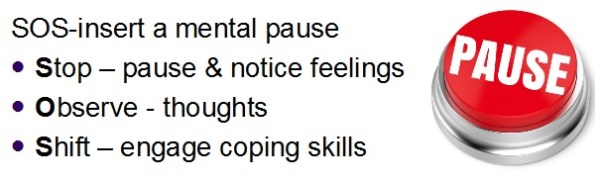
If our beliefs are based on irrational thoughts, consequences may be negative. But we can insert a mental pause with the SOS method to ask questions and choose more effective rational thoughts for a more positive outcome.

Ask Begin to dispute irrational thoughts  Choose effective rational thoughts +

Ask: Use the SOS technique to insert a mental pause to identify emotions and ask questions:

  • What are my feelings?
  • Am I seeing this clearly?
  • Is this a rational thought? Is it logical and reasonable?
  • Is it true? Is it accurate?
  • What are the facts? Is there evidence?
  • Am I exaggerating or over-reacting?
  • Am I mistaken to take this personally?
  • Is this an overly pessimistic view?

Begin to dispute irrational thoughts. Some common cognitive distortions:

  1. All-or-Nothing Thinking
  2. Overgeneralizing
  3. Discounting the Positive
  4. Jumping to Conclusions
  5. Mind Reading
  6. Fortune Telling
  7. Magnifying (Catastrophising) or Minimizing
  8. Emotional Reasoning
  9. Should Statements
  10. Labeling and Mislabeling
  11. Personalizing

Choose to substitute effective rational thoughts:

  • feelings are caused by beliefs and thoughts, not by events
  • not everyone will love me
  • nobody is perfect
  • there are reasons for behavior
  • the universe wasn’t created for me
  • worry is not helpful (but planning can be)
  • facing problems is better than avoidance and denial
  • learn from the past while moving forward
  • change is possible

This week, I will notice how my feelings, beliefs and thoughts are connected. I will print an REBT self help form and use it each day. I will replace irrational beliefs and thoughts with rational ones.

ABCirrational-rational

Download the ABCs of REBT worksheet (pdf) Watch a video about the ABCDE Model. (6:35)

Knowing what you are thinking is a part of Creating Clarity. One of the Four Agreements is to Be Impeccable With Your Words. Uplift yourself with honest self-talk using REBT.

learn more about understanding emotions:

This is one of the weekly activities for a Year of Personal Development and part of the series on emotional intelligence.

Posted in Year of Personal Growth

This Emotional Life

This Emotional Life information and series on PBS is a great resource on emotions.

Posted in Year of Personal Growth

Identify Emotions

Emotional – Activity: Identify Emotions

Feelings come in a wide variety of types and intensity. Emotions may be painful when our needs are not met, or pleasurable when needs are met. Learning to increase awareness to recognize the emotions we are feeling is an important skill to develop our emotional intelligence. [Learn more about emotional intelligence]

Emotions in the Body

Physical sensations can provide clues to what we are feeling emotionally. It can be easier to get irritated when hot, or to be distracted when cold. Temperature is one of the physical indicators of emotions. So are breath and heart rates, which can increase with painful emotions of fear or anger, and sometimes when we feel brave or in love. Paying attention to tension and posture is also important to identify feelings. We tend to clench muscles when emotions are painful, and to stand upright with head up and shoulders back when emotions are pleasurable. When our needs are not satisfied, we may feel drained of energy, and when they are satisfied we often feel full of energy. These are not the only ways that emotions manifest in the body, but awareness of these is a good place to start. Learn more at the Wheel of Awareness.

RATE these key physical indicators to identify your feelings:

  • Rates: breath & heart
  • Assess posture
  • Temperature & tension
  • Energy levels

Scan the body, starting at the top and moving downward to check head, chest, shoulders, and the rest of the body. Pay attention to aches and pains. Head: do you feel tight and tense, or relaxed? Neck and shoulders: are you slumped or upright? Chest: is your breath and heart rate fast, or slow? Body: do you feel hot or cold? tired and drained, or energized?

To manage emotions, it can help to gain control of rates with biofeedback, deep breathing, and meditation. For better posture, stretch and strengthen muscles and practice power poses (see Amy Cuddy’s TED Talk). Practice self care and other coping skills to manage stress and increase energy. Strong self-esteem makes managing emotions easier.

EmotionsInBodyRecognize the emotions that these physical signs may be indicating. Signs of anger can include…hot or flushed face, clenched jaw, tense and tight shoulders, fast breath and heart rate, shaking or jerky body movements, clenched fists. Some of these may also indicate anxiety, stress, or fear. Recent research has created body maps showing where and how emotions are felt. See what they have discovered at this NPR article and at greatist.com. The Emotions Sensations Wheel at lindsaybraman.com is also helpful for this.

Naming Emotions

When needs are satisfied, we feel: happy, love, courageous, strong, and engaged. When needs are not satisfied, we feel: sad, hate, feear, anger, and disengaged. Many words are used to describe feelings, which can vary in intensity. The following tools can help to clarify emotions.

Tools to Identify Emotions

SMART goal:

This week, I will print a feelings chart and mood diary, and each evening note what I’ve been feeling during  the day.

Resources for identifying emotions

More on Emotional Intelligence, Resilience, and the Coping Skills Toolkit

More activities for a Year of Personal Development

Posted in Year of Personal Growth

Practice the Four Agreements

Spiritual – Activity: Practice the Four Agreements

Read “The Four Agreements” by Don Miguel Ruiz.

  1. Be Impeccable With Your Word. This means speaking the truth to yourself as well as to others.
  2. Don’t Take Anything Personally.
  3. Don’t Make Assumptions.
  4. Always Do Your Best.

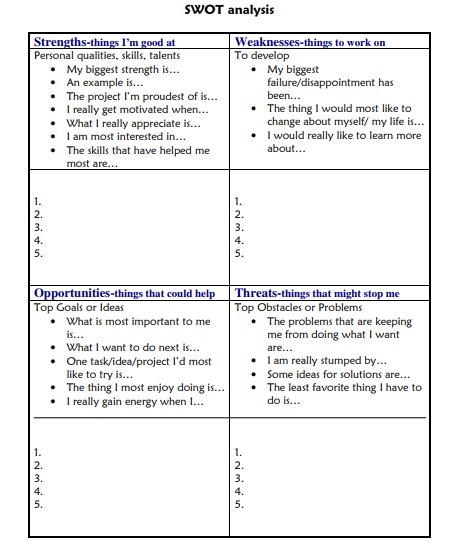
I will print this summary of the Four Agreements (found here) and carry it with me this week to remind me to practice them.

Review this Introductory Video to the Four Agreements (3:42) at www.miguelruiz.com.

A nice summary at highexistence.com.

This is one of the weekly activities for a Year of Personal Development.
Posted in Year of Personal Growth

Earth Day Activities

Boy Mama Teacher Mama Save the Earth Poster 2013

I will make a written pledge of at least seven actions that I will take this week that will help the Earth’s environment. I will sign it and do one (or more) action each day.

This is one of the weekly activities for a Year of Personal Development.

Posted in Year of Personal Growth

Practice meditation

The benefits of meditation are amazing!

MeditationBenefits

Learn how to meditate

Learn More:

Your Mission:

I will listen to a guided meditation and practice for 10 minutes every afternoon for one week.

“Wake up, Neo…”

The terms meditation and mindfulness are sometimes used synonymously, but mindfulness is about being aware of the present moment. Learn more at A Mindful Moment.

Experience the benefits of meditation for yourself!

Videos:

Scientific American Video ( 2:24)
Dan Harris Video from Big Think (3:44)
Sara Lazar TED Talk (8:34)
Meditation 101 (2:01) video from Happify
Youtube playlist of Help Guide meditations
Meditation for grief video from Megan Devine (9:48)
10 minute gratitude meditation for when life just sucks from Sky Jarret

Meditation Studies:

Book: “The Emotional Life of Your Brain” by Richard Davidson
7 ways meditation can change the brain from Forbes

Books:

“Fully Present” by Diana Winston and Susan Smalley, TED talk “The Practice of Mindfulness” by Diana Winston (17:07)
“Mindfulness for Beginners” by Jon Kabat-Zinn, watch “Introduction and Body Scan” (32:05)

Meditation Apps & Online Resources:

The Best Meditation Apps from Healthline
Headspace and more apps
Healthy Minds app
One Moment Meditation
GPS for the Soul app (ios)

Relaxation: Take a Break app from Meditation Oasis with a 7 minute work break or 13 minute stress relief guided meditation. For insomnia, try the Can’t Sleep video (2:17) from Jason Stephenson. Try 4-7-8 breathing and listen to the Delta Sleep System by Jeffery Thompson. Space music or piano music by Kevin Kern or David Lanz can be helpful.

Mindfulness: The Virtual Hope Box app at health.mil includes a 4 minute Beach Guided Meditation, or try the Walk Along a Beach video (24:41) from Jason Stephenson.

Compassion: A Loving-Kindness meditation from UCLA (9:00) is available online. A longer online version (17:49) from mindful.org.

Learn more at the Positive Shift Happens Toolkit and the Meditate Pinterest board. This is one of the weekly activities for a Year of Personal Development.

Tagged with:
Posted in positive shift, Year of Personal Growth

Examine Your Spiritual Beliefs

Spiritual – Activity: Examine Beliefs

“An unexamined life is not worth living” -Socrates

Belief:

1: a state or habit of mind in which trust or confidence is placed in some person or thing
2: something believed; especially : a tenet or body of tenets held by a group
3: conviction of the truth of some statement or the reality of some being or phenomenon especially when based on examination of evidence

Beliefs may be either spiritual or mental. Either way, the key question is: What are your guiding principles? They are connected to the values that you hold to be important.

Examples: Many religions provide guiding principles. For examples of more guiding principles see DesiderataBen Franklin’s Governing Values, Rotary’s Four Way Test, and Don Miguel Ruiz’s Four Agreements.

Tools to Examine Spiritual Beliefs:

What’s Your Spiritual Type? at Beliefnet.com, and the Big Religion Chart at Religionfacts.com.

See also Examine Your Mental Beliefs, Part Four of Discover U in Ten Steps.

This is one of the weekly activities for a Year of Personal Development. Studies show that those with a spiritual practice or religious beliefs tend to be happier than those who don’t. Spirituality is one of the building blocks of positive shift.

Posted in Year of Personal Growth

Practice Gratitude

Benefits of Gratitude

GratitudeBenefits

Keep a gratitude journal

This is one of the weekly activities for a Year of Personal Growth. A gratitude journal is a powerful tool to increase awareness of the blessings in our lives. Simply write down a few things you are grateful for each day. Studies consistently show that people who keep a gratitude journal are 25 percent happier than those who don’t!

Try the Gratitude Spinner Wheel for 32 things to be grateful for.

GratitudeSpinner

1. family
2. friends
3. ideas to share
4. a kind word
5. sunshine
6. flowers
7. art
8. scented candles
9. hot coffee
10. a tasty meal
11. ice cream
12. beautiful music
13. raindrops on the roof
14. naps
15. soft blankets
16. a good nights sleep
17. a new day
18. a warm bubble bath
19. a good movie
20. a funny cartoon
21. sharing a laugh
22. learning
23. creativity
24. finding the perfect gift
25. birds chirping
26. going for a swim
27. a crackling fire
28. going for a walk
29. an entertaining book
30. dancing for joy
31. a pet to cuddle with
32. a flowing stream

Tools to use:

1. A weekly printable Gratitude Journal (pdf)

GratitudeJournal2. Thnx4.org is an online gratitude journal. Many apps are available for smartphones and tablets. Gratitude Garden is available for both Android and ios. Android Gratitude app to try:  Attitudes of Gratitude.

Your Mission:

Try it for a week, and you will likely continue the practice of gratitude.

I will practice gratitude by writing down a few things I am grateful for, every day this week in a gratitude journal. I will thank someone I am grateful for, either verbally, or with an email or thank you card at least once.

Learn more:

Simple things to be grateful for:

Try a complaint free challenge! Watch Nature. Beauty. Gratitude.

Gifts of Appreciation combine gratitude with Random Acts of Kindness. These small gifts (often candy or other small treat) with a punny tag on them can be left as surprises for anyone.

Check out the other weekly activities for a Year of Personal Growth!

Tagged with: ,
Posted in positive shift, Year of Personal Growth

Increase Energy Levels

Physical – Activity: Increase Energy LevelsEnergy is one of the resources we need to accomplish goals. Some great ways to increase energy levels are covered in some of  the activities in A Year of Personal Growth (category feed here). To MASTER energy:

Tony Schwartz, author of “The Way We’re Working Isn’t Working” and co-author of “The Power of Full Engagement,” argues that it is better to manage energy than time. Time is finite, while energy can be expanded. An article at verbaltovisual summarizes this. Find the TED talk and more books and videos at Learn about Productivity. Explore more ways to increase energy levels at MichaelHyatt.com and Effective ways to regain energy at Greatist.com.

Discover your peak time for thinking and creative work so you can use it well. A way to do this is to  Chart Energy Levels with a Time Log for a week to pinpoint times when energy may be high or low. Pause to notice energy levels, use your prime time to tackle demanding tasks, and when energy is low, take a break and uplift yourself with activities that energize you.

This is one of the weekly activities for a Year of Personal Development.
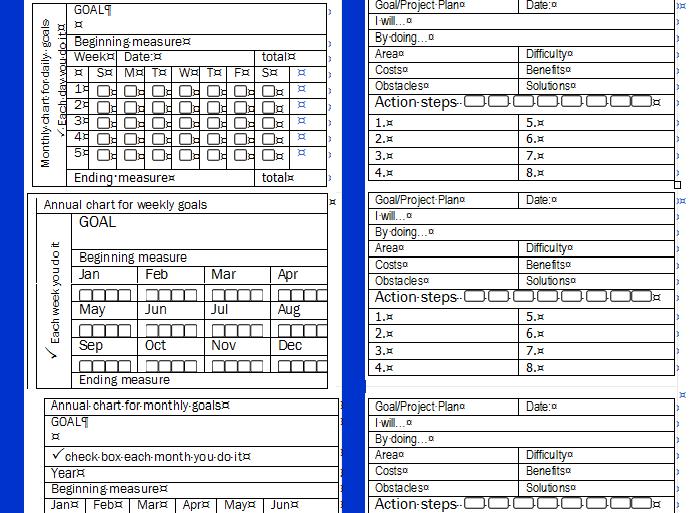
You may also want to use the Life Area Energy Gauge to get an overview of energy levels in 12 areas of life. Time and energy are limited resources. Some tasks require healthy amounts of both! See: Why We Procrastinate

Posted in Year of Personal Growth

Practice Deep Breathing

Physical – Activity: Practice Deep Breathing

Deep breathing has been show to be beneficial in many ways. When we practice deep breathing, we can lower blood pressure, improve heart rate and sleep, lower stress, and feel calmer and improve ability to handle emotions.

BreatheBenefits BreathingBenefits2

Benefits of Deep Breathing:

Learn How

via GIPHY or Breathe Bubble from Calm at Youtube

If you have a smartphone or tablet, try the Breath2Relax app from health.mil. It includes a demonstration, stress rating, and cycles for deep breathing.

Try the Breath Awareness Meditation at Meditation Oasis or 6 Breathing Exercises to Relax in 10 minutes or less at Greatist.com.

white daisy flower bloom

Photo by Aaron Burden on Pexels.com

Practice Deep Breathing using the diaphragm. Count to five while inhaling through the nose, then count to five while exhaling through pursed lips. If possible, place a hand between navel and ribcage to feel the abdomen rise with the diaphragm. It can be helpful to imagine a flower that you sniff as you inhale and blow the petals as you exhale.

To remind yourself to breathe deeply throughout the day, you can use an hourly timer like the Blip Blip app for Android. Or make a golf stroke counter with 10 beads, and move a bead each time you focus on taking 10 deep breaths. They can be hooked onto key chains or belt loops, or used as a bracelet.

Your Mission:

I will take 10 deep breaths at least 10 times a day this week, when the hour changes. I will use a timer to remind me, and keep track with a golf stroke bead counter every day for one week.

Amazon affiliate links to books below provide a small commission that helps to support the Daily PlanIt.

Books and TED talks:

MORE TOOLS:

This is one of the weekly activities for a Year of Personal Development and a coping skill.

Tagged with:
Posted in positive shift, Year of Personal Growth
eBooks

Enter your email address to follow this blog and receive notifications of new posts by email.

Archives
Blog Stats
  • 745,916 hits