Combating Procrastination

ProcrastinatorProcrastination is something I think everyone has experienced. It’s a very common productivity problem, and on my list of top time wasters (with solutions.) Understanding Procrastination Triggers and “Why We Procrastinate” can help. So can identifying priorities and deciding what to say yes or no to.

I thought about selling used books on Amazon as a possibility to earn a little money for a long time. When I finally got around to taking a look at it I discovered there’s a lot of competition. Is it really worth the amount of time it would take to post items and ship them? Probably not. Too many people have already jumped on that wagon. Sometimes, if you procrastinate too long, you miss that window of opportunity and it will pass right on by.

So what can we do about it? One thing is to pause, review and evaluate what we’re spending our time on. Are the projects we’re working on really effective for reaching our goals? Is the idea we’re thinking of a good one to pursue or not? Take a close look at the Return on Investment (ROI). ROI is frequently used in terms of financial return, but on a personal level we really need to consider the investment of our time and energy (both of which are resources available in limited amounts) and the likely outcome or results. Look for VIP AIMS that have BIG impact and HIGH engagement. Life is too short to not being doing the things that support our top priority values.

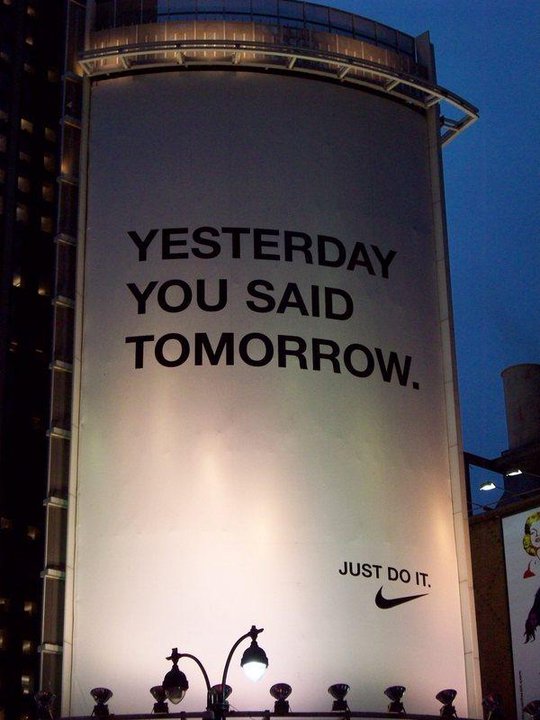
Once you’re very clear about what it is that you really want to do, the next thing is to get yourself motivated to TAKE ACTION. Like this Nike advertisement says: “Yesterday you said tomorrow. Just do it!”

Yesterday

I did get one thing done this week that I’ve procrastinated about for a long time.  On the Daily PlanIt website, I have now added a link to shopping cartThe Daily PlanIt Amazon Store. Here you can find links to my favorite books and products for productivity and personal development.

Here are several articles and inspiring pictures about procrastination I’ve seen recently:

From the Daily PlanIt:

How do you combat procrastination? Let me know if you get around to it!

verybusy

Tagged with:
Posted in productivity

2014-3-3 Weekly Review

This week I shared How I Created My First eBook, complete with helpful links. I hope this is helpful to those who wish to tackle this project. On the Daily PlanIt Facebook page, I shared a great free tool from David Meerman Scott, a Free Marketing Strategy Template. Plus a lot of other neat stuff, like the Happy song by Pharrell Williams.

LeftBrainRightBrain

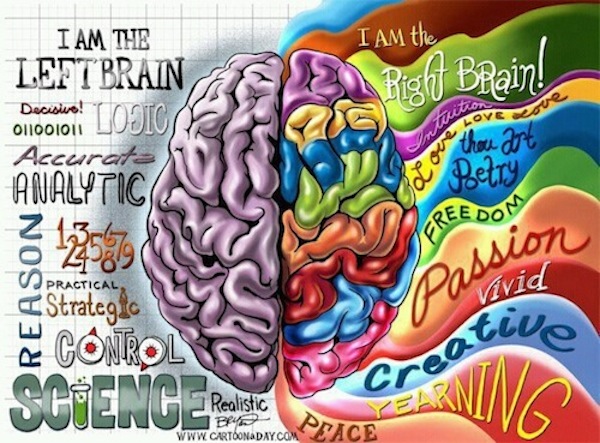
During the past week I took a quiz to determine if I am left brain or right brain dominant, and was shocked and dismayed by the results! Let’s just say that it said I’m strongly left brain. Sure, I get that I like to make lists and organize things, and that’s a left brain function. But I highly value creativity and art, and like to think I’m at least a little bit creative. So I was very disturbed to see this result.

It bothered me so much I decided to re-take the test, and then take a closer look at what it is based on. The second time it came out a little better: 69% left, 31% right. I looked at the explanation of the test which came up after the test was completed.

Later I found another article that reassured me that brain dominance is not something to get worked up about. As long as you have a functioning brain, that’s the main thing! Still, I may try to spend some more time exercising my creative side.

Have you heard comedian Jeanne Robertson talking about her left-brain husband? She is one funny lady!

Smead has an article on how to set up an office based on brain dominance. See also Brain Basics. Have a great week!

Want to see more? I invite you to “like” the Daily PlanIt Facebook page and follow me on Pinterest!
Posted in Weekly Review

How I Created My First eBook

ebookpublishCreating an eBook was a challenge and learning experience. One thing I learned was that it’s all changing very fast. I would research and find websites, and the next time I looked they were gone. The positive side of that is that it’s become much easier to create an eBook with Amazon Kindle Direct Publishing (KDP.) I found it really simple to upload, preview, and edit in KDP. Here is a nice guide from the publishers of the For Dummies books. David Gaughran has a good post about the basics of publishing.

CONTENT

Of course you want to start by having great content for your eBook. This article at Firepole Marketing has some good advice on that. My first challenge was grabbing content from my blog to use in the book. I used http://blog2book.pothi.com/ for this. Then I did a lot of editing to improve and organize that content.

WORD TEMPLATE

I don’t have the newest version of Microsoft Word, so this was a bit of a challenge also.

TABLE OF CONTENTS

Shauna Kelly has a great explanation of How to create a Table of Contents in Microsoft Word. This video explains how to create a table of contents in Open Office.

FORMATTING

MS Word tends to put extra “stuff” in that might not be visible but looks weird when you publish an eBook. I read a lot about this, and can’t even remember what was most helpful now! It gave me a headache!

COVER

I simply used one of the covers from KDP.

COPYRIGHT

I’m no legal expert, but at Legal Stuff in Ebooks JW Manus says:  “Your written work is copyrighted as soon as it is in tangible form- Nor are you required to register your copyright with the US Copyright Office.”

Copyright Page Samples from The Book Designer

PRICING

  • Do a search of your topic to see the prices of similar eBooks.
  • Read How to Price Your eBook from Mill City Press.

MARKETING

  • Once you are ready to publish, Marketing your eBook is the next step! Find out why, how and tools for getting it done at Checklist to Market an eBook.

CREATE A PDF WITH CLICKABLE LINKS

Sometimes you may want to provide a free eBook as a pdf with clickable links. Here’s how to do this…

Want to see more? I invite you to “like” the Daily PlanIt Facebook page and follow me on Pinterest! My eBook “Get Goaling: the simple guide to set and achieve your goals.” is a clear, concise, step-by-step guide that gives you the tools to learn the skills and get goaling quickly.

Posted in Books, goals, Ideas That Work

2014-2-24 Weekly Review

Has this ever happened to you? You are thinking of that perfect article or website you saw recently that you now want to share or write about…but you can’t remember exactly what it was or where you saw it? Did you save it in the bookmarks on your computer? On Delicious? Did you pin it on Pinterest? Did you add a post on Facebook? You do searches on keywords in Google and spend hours browsing through the results. You spend more hours browsing through the history on your computer. Where oh where is that bit of information you need? We are so inundated with information it can be extremely difficult to keep track of it all. This is the kind of thing that can drive me completely bonkers.findinginfo

And that is how I spent some (okay, a lot) of my time this week! And I finally found it! (it was hiding in my Facebook feed) I was looking for the most intriguing incentive to sign up for email I’ve seen: an invitation to the Procrastinator’s Anonymous Newsletter at alphaefficiency.com. (Ironically, I still haven’t gotten around to it. Why do you think I write about this stuff?)

While Pinterest is great for visual things, and Facebook is great for connection, they aren’t wonderful for organizing information, or finding it again. How do you keep track of information you might want to refer to again?

Marketing an eBook is quite a challenge and learning experience. Find out why you should take these steps, how to do it, and tools for getting it done in my post “Checklist to Market an eBook.” There’s even a free printable checklist. I shared a free marketing plan at KCSourcelink on the Daily PlanIt Facebook page this week. If you don’t want to miss this stuff, like us!

This week I’ve been learning a little bit about Mailchimp as a way of collecting emails. I still have a lot of things to do on eBook Marketing checklist, it is definitely a process that takes time! I’m considering ideas for a wonderful incentive to offer, is there something you would really love to see? I’m thinking of offering a free email course on Exploring Talents. Perhaps a Creativity Prompter or Telephone Tips? What would be most enticing to you to sign up?

I’ve also had a major cold this week, which has had an effect my productivity. I kept optimistically buying small bottles of cold remedy when I should have said “Super Size me!” It’s hung on awhile, but I think I’m finally getting over it. I did learn a little more about video as I filmed my husband James and our cat PT. James is an expert at “cat fishing!” and PT is an amazing leaper. Just for fun: Check out the short video (.07) or the longer version (2 min.) Note to self: next time turn off the television.

Have a great week!

Want to see more? I invite you to “like” the Daily PlanIt Facebook page and follow me on Pinterest!
Posted in Weekly Review

Checklist to Market an eBook

You’ve published your eBook, now Marketing your eBook is the next step! ebookFind out why you should take these steps, how to do it, and tools for getting it done efficiently right here! Marketing an eBook takes some time, no matter how efficient you attempt to be. There is a learning curve, and my marketing efforts are still a work in progress. Some of these ideas I’ve put in place, and some I plan to. I hope they’ll help you get started with your marketing efforts!

I resisted this for a couple of reasons: 1. I don’t like to get a lot of stuff in my email, and 2. I wasn’t sure I wanted to commit to communicating on a regular basis. However, everything I read about marketing emphasizes the importance of this, and The Author With The Biggest Mailing List Wins convinced me. There are various options for doing this, ultimately I chose MailChimp. Note: While MailChimp is free up to a certain number, it is not free to set up autoresponders.

  • Set up a way to manage the emails you collect, so you can add them to MailChimp and keep track of them: Vertex 42 offers a free Contact List Template.
  • Next find a way to add the email sign-up form to your website. I ended up adding an image widget to my blog with a link to the sign-up form.
  • Offer something they will want to sign up. People want something of value to them. Problogger describes how to create something that solves a problem for your readers. Some bloggers offer a report, guide or whitepaper of interest. Michael Hyatt offers a free Ebook. Personally, it takes a lot for me to sign up for more email in my inbox. I was really tempted by the Procrastinator’s Anonymous Newsletter offer by alphaefficiency.com!
  • Consider a free newsletter. I experimented with curating a weekly review with highlights in Flipboard, however, there are templates in MailChimp that work fine for newsletters.
  • Decide how often you will send email: Not too much, not too little. I’m still not sure what the optimal frequency is.
  • Create a Welcome email.
  • Continue to improve your marketing in creative ways.

I invite you to “like” the Daily PlanIt Facebook page and follow me on Pinterest for more information and tools for developing work and life skills. (You might even consider signing up for my email list)

pointing+hand+vintage+image+graphicsfairy2Get your free printable (pdf)  eBook Marketing Checklist!

Posted in Books, Ideas That Work

2014-2-17 Review

We all know the importance of a Weekly Review, right?! Keep-calm-and-weekly-review-trans

I’m beginning a new feature to provide highlights of the past week at The Daily PlanIt, with tools and information to develop work and life skills. You can view the highlights on Flipboard, and read the summary below.

In the past week, we celebrated Valentine’s Day, a good time to reflect on choosing love, whether we are single, or in a relationship. Single people can appreciate family and friends, and those in a relationship can express gratitude for their special person as well. Everyone can “Practice love until you remember that you are love.” – Swami Sai Premananda.

At a time when I was single, I read a lot of books trying to understand love. Two were especially helpful to me. Find out what they were by reading this post from a Year of Personal Growth with the weekly activity:  Choose Love.

Some of the things I learned were:

Love begins with loving yourself. Only when we love ourselves are we able to give love. Know that you are loved and lovable, just because you are here.

An infinite supply of love is available: “Love is a treasure for which we never can pay, the only way we keep it is to give it away.”

Me&JamesSailboat2

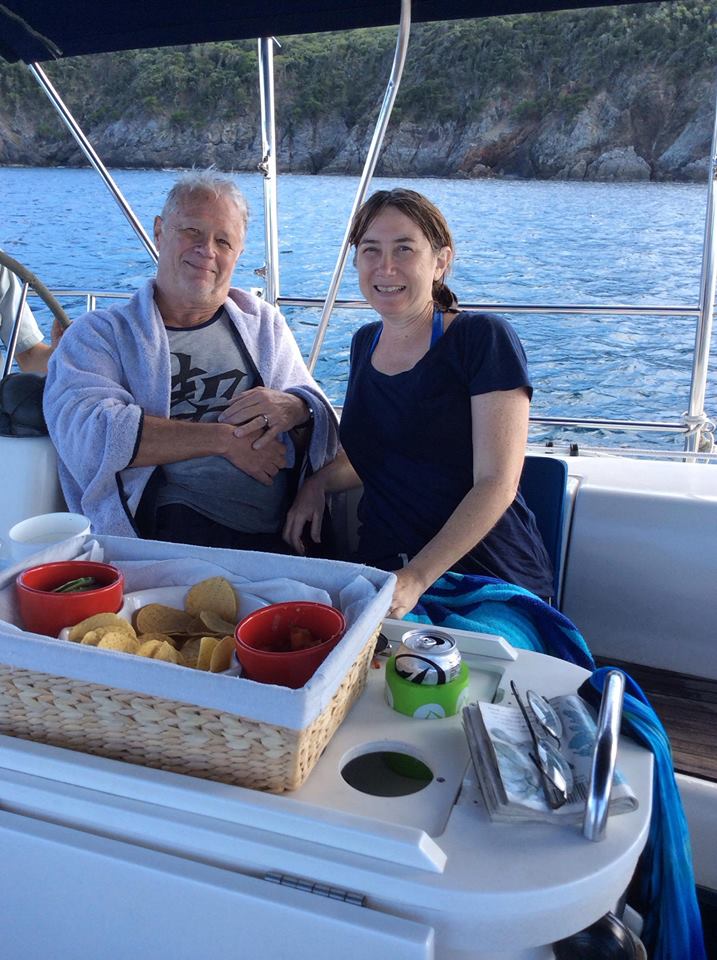
Last week my husband and I went on a trip to visit a place we love, the beautiful island of St. Thomas, and spent some time doing something we both love: snorkeling in the ocean and swimming with the fish. What a blessing it was to escape the cold weather and enjoy the warm sunshine for awhile! And how thankful I am to have this wonderful man in my life!

This week I found an awesome quote from Kid President: “Create something that will make the world awesome.”


I believe so strongly that it is important to do what you love! I recently published at course at Udemy called “Gain Incredible Focus with a Personal Mission Statement” that will help discover the intersection between what you are good at, what you love, and what the world needs.

FocusMap

Turn ideas into assets for the fun and excitement of creating something that adds value.

That was one of the main points I got from a book I read last year that had a big impact on me: “Rich Dad, Poor Dad” by Robert Kiyosaki:

To get started, you can can Learn Entrepreneurial Skills with these links. There’s some amazing stuff here, and it’s free!

Have a great week!

Want to see more? I invite you to “like” the Daily PlanIt Facebook page and follow me on Pinterest!

Posted in Weekly Review

What Do You Make? Resources to learn Entrepreneurial Skills

A book that really had an impact on me in 2013 is: “Rich Dad, Poor Dad: What the Rich Teach Their Kids About Money-That the Poor and the Middle Class Do Not!” by Robert T. Kiyosaki.

Money was not a motivational force in my career, and I never had to worry about having extra money beyond living expenses. A common sense approach to money management worked fine. Besides, I found financial information rather complicated to understand, so I had never read a book about money before. In college, I was disillusioned by a society that focused on material things to the exclusion of things which I thought more important. As life has gone by, I have come to understand that money surely does come in handy sometimes. It enables things to be accomplished and can provide security. Money doesn’t buy happiness, but it is nice to be able to buy things sometimes. Eventually, I decided it was time to become more financially literate. For the first time I  looked for books that might be able to communicate the concepts clearly, and I came across this book. It made two points that were eye-openers for me:

Point One: There are two main ways to really make money: 1) investing in real estate, or 2) starting your own business. Both involve some risk.

Point Two: When people build businesses, the driving force is most likely the fun and excitement of turning ideas into assets. While making money is hopefully a side effect, the real joy comes from creating something!

It inspired a desire in me to create something of value, something that people want to be part of! However, it takes lots of skills to build a business, entrepreneurial skills I don’t have, like: financial, sales & marketing, production & distribution, business models, and market research. Also, both of these options involve some risk. Once upon a time, you could count on an investment in real estate to appreciate, but times have changed. According to the SBA, 50% of new businesses fail in the first five years. It’s important to consider the risks involved.

Can these entrepreneurial skills be learned? I’ve been exploring some great resources for learning entrepreneurial skills, just for the fun of it! Here’s some:

Posted in work skills

Evaluating Ideas and Projects

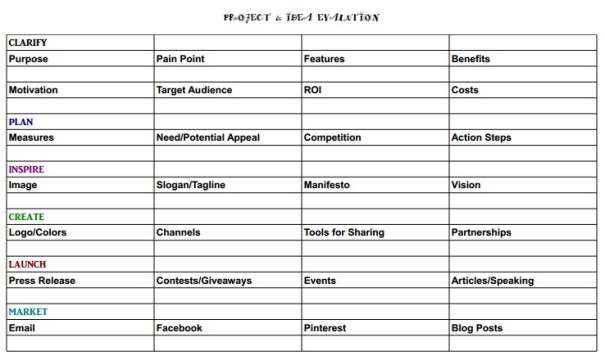
ProjectIdeaEvaluationImage

Are you spending your time on projects that really contribute to your goals?

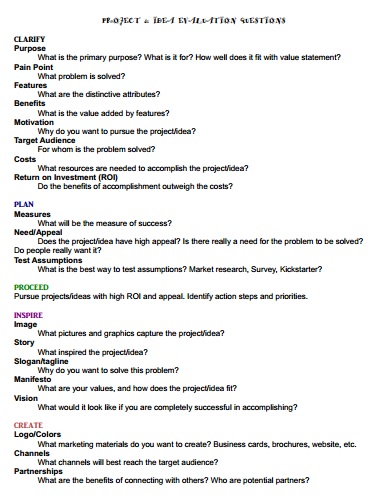
ProjectIdeaEvaluationForm

Project and Idea Evaluation

Take a closer look at your activities to see if they support your core value statement (Unique Selling Proposition or Mission Statement) and have a significant impact. The main difference between projects and goals is the time frame. Projects are the step between goals and daily action. The process of planning is the same for both, and the same tools can be used for planning either projects or goals. Not all projects require this level of analysis, but it can be helpful with larger ones.

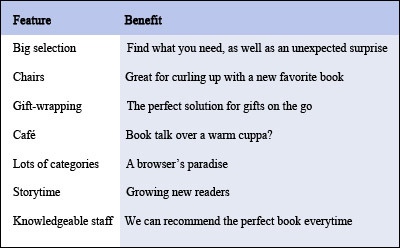
feature-benefit

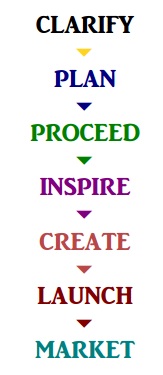
Step 1. First, CLARIFY the Idea/Project

What is the primary purpose? How well does it fit your value statement? What problem is solved? What are the features? (distinctive attributes) What are the benefits? (value added by the features) Why do you want to pursue this? For whom is the problem solved? What resources are needed to accomplish? Do the benefits of accomplishment outweigh the costs?

Step 2. PLAN

What will be the measure of success? Does the project/idea have high appeal? Is there really a need for the problem to be solved? Do people really want it? How much? What is the best way to test assumptions?

yes button

PROCEED! Pursue projects and ideas with significant impact and appeal. You might like a Goal and Project Plan form to help identify action steps and priorities. Learn more at the free Goal Setting Tutorial.

Step 3. INSPIRE

What pictures and graphics capture the project/idea? What inspired the project/idea? Why do you want to solve this problem? What are your values, and how does the project/idea fit with them? What would it look like if you are completely successful in accomplishing it?

Step 4. CREATE

What marketing materials will you create to communicate your project/idea? What channels will best reach the target audience? How can you Design and Deliver a Delightful User Journey and provide a WOW customer experience? Are there benefits of connecting with others? Who are potential partners?

ProjectIdeaEvaluationQuestions

Download a Free printable  Project/Idea Evaluation Form (pdf) and Project/Idea Evaluation Questions (pdf)

Project evaluation has been helping me understand why it is important to me to continue to spend time researching and writing articles for the Daily PlanIt. The website is a good fit with my core value statement:

“I create tools and share information for developing work and life skills.”

See Also: Evaluate Goals

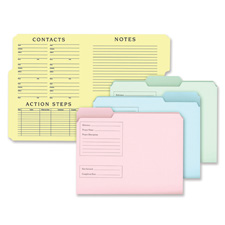
projectfiles

More Project Planning Forms at PEP Worldwide | Project Form (pdf) from Flipping Heck

Learn more: IDEAS Criteria from Productivityist

More Tools at the Branding Toolkit & Change Toolkit, and the Projects board at Pinterest

Tagged with:
Posted in goals

Learning about a Low Carb Diet

Diabetes entered our life in December, which has prompted us to learn more about eating a low-carb diet. I had of course heard of low-carb and the Atkins diet before, but found it all too confusing. I love bread, and don’t love too many veggies. Added to that I need to avoid MSG, another whole different issue. When I first began reading about all this, it was pretty overwhelming. I could not figure out the GI index and exchanges. I have now looked at cookbooks at the bookstore three times and still haven’t been able to choose one. I’d like to share some of what I learned in case it might be helpful to others. A low-carb diet has the additional benefit of weight control, and is generally a good choice for those looking for a healthy diet. First let me say that I am no expert and do not have all the answers. Plus, everyone is different in their tastes and the issues they face. Take what fits you from this!

NOTE: I finally found the book I was looking for! “Prediabetes: a complete guide” by Jill Weisenberger is wonderful. As far as cookbooks go, so far the one I’ve liked best is “Betty Crocker’s Diabetes Cookbook: Everyday Meals, Easy as 1 2 3.” I have now created an eBook with recipes designed for a low-carb diet. Check out Simply Dinner: the Game Plan!

One of the most helpful things I have done was go on a tour of the Hy-Vee Grocery store with the Hy-Vee Dietician, Jaime. We looked at a lot of food labels, she pointed out some good choices and gave me some great advice. I had read the Hy-vee brochure on diabetes, but after she explained it, it made a lot more sense. It’s a very smart move for Hy-Vee to provide this great service, and much appreciated.

For a low-carb plate, you fill half the plate with veggies, 1/4 with lean protein, and 1/4 with healthy carbs.

What are Carbs? Starches: bread, potatoes, rice and pasta. Sugars: sweet desserts like cakes, pies, and doughnuts. Fiber: cereals, grains, beans, fruits. Even dairy items like milk, yogurt, and cottage cheese have carbs.

Bad carbs, Good carbs. From Atkins.com: “Bad carbs are highly processed carbohydrates (refined breads, cereals and pastries) that raise blood sugar too high and too quickly. These refined carbohydrates are not only higher in sugar and significantly lower in nutrients and fiber than whole foods, but they also break down more rapidly into glucose and enter your bloodstream far faster than vegetables and other good carbs. So if you eat refined carbohydrate foods, you stay on the blood sugar roller coaster ride of highs and lows.”

The goal is to keep blood sugar even by eating a balance of foods at regular intervals, limiting bad carbs as much as possible, and watching the quantities of good carbs. This is why a diabetic diet is a low-carb diet. Jaime said our bodies need some of the good carbs, it’s a matter of how much and a balance with protein and veggies. She suggested flaxseed is beneficial, and an easy way to add it is to sprinkle a tablespoon of Hodgson’s Mill Ground Flaxseed on yogurt, salads, or oatmeal.

Carb Counting

Most people will aim for 45 – 60 grams of carb per meal, or 3 – 4 servings of 15 grams. To do this, you need to learn what 15 grams of carb looks like. There’s a nice pdf guide to carb counting at stanfordhealthcare.org and another chart from SparkPeople. One of the first things Jaime showed me was that size matters. A small apple or banana counts as 1 serving, while a large one would count as 2. You can download a 43 page carb counter at Atkins.com.

Reading Labels

Plan to go on a trip to the grocery store at a time when it is not very busy and you can spend a lot of time looking at labels. Usually we are busy and want to run into the store with our list, grab what we need and go. That is not this. In fact, you might not buy a thing on this trip. It can be hard to see the labels in a store, so it can be helpful to look things up online at Calorie Counter  (You can find nutrition labels for some brand names here.) First look at the serving size, then the grams of carb. I know it’s not much fun to read nutrition labels, but it’s essential. You will be amazed at how many carbs are in some things, and at the variation between brands.

After you do this awhile, you begin to look at every food and think either “carb” or “not carb.” Then I looked at my own dietary habits, and it went like this: For breakfast I usually had cereal (carb.) A fruit snack in the morning (carb.) Often yogurt and granola for lunch (carb.) I often went the whole day with only a serving of protein at dinner, and very rarely had veggies! And thought I was eating pretty healthy! I’m planning some changes. Some are easy: Greek yogurt is yummy and has protein, and Nature Valley protein bars are tasty. Others are hard: the Italian food I love is pretty much off the table.

grocery list

I have customized a grocery shopping list, removing the things with carbs that we plan to cut out like potatoes and rice. There are still some things with carbs on there, because I just don’t think I can exist without crackers, and a few other things like cereal and salty snack foods. Other things like pancakes we might have rarely. Everyone has to make choices on what they can live without and what they can’t. You can usually have some carbs in small amounts, and you just have to decide which ones. You are welcome to grab this and customize it to your preferences.

Brands change all the time, and availability can vary. That said, here are some good choices I have found so far.

  • Bread: Nature’s Own 100% Whole Wheat (1 slice, 70 calories, 12 g carbs)
  • Salad Dressing: Kraft Zesty Italian (2 T, 50 calories, 2 g carbs)
  • Protein Shake: Premier Protein (30 g of protein, we get these at Costco) (160 calories/4 g carbs)
  • Protein Bar: Nature Valley- Chewy Peanut, Almond & Dark Chocolate ( 190 calories/14 g carbs)
  • Yogurt: Dannon Light & Fit Greek (80 calories/9 g carbs)
  • Delmonte Fruit Naturals Peach Chunks, no sugar added (50 calories/12 g carbs)
  • Hyvee Light Fudgsicle (45 calories/11 g carbs)

Some of the healthier choices cost more. For example, the greek yogurt is about twice as much as the other kind. Ask yourself, “Isn’t it worth it to add protein and lower carbs for a healthier diet?” Plus, you are saving money by no longer buying junk food.

More good snacks to have on hand:

  • Apples
  • Bananas
  • Carrots
  • Celery w/peanut butter
  • Rice cakes
  • String cheese
  • Cottage cheese
  • Nuts
  • Black Olives
  • Applesauce cups (natural, or unsweetened)

Vegetables

With a few exceptions, you can pretty much have all the veggies you want without counting. The few exceptions are: potatoes, corn, peas, and squash (acorn & butternut.)

French Fries used to be my favorite vegetable, until I saw this nutritional facts infographic. I share this with you since this had the immediate effect of eliminating my desire for French Fries. That’s the power of information!

frenchfries

That’s 380 calories, 17 g fat, 48 g carbs, 4 g protein, or 42% fat, 53% carbs, 5% protein! WOW! A different infographic shows this also equals 35 minutes on a treadmill. Sort of makes you think twice, doesn’t it?

Since there are many vegetables I don’t enjoy, it will be a challenge to add more veggies to our meals.

I put together resources to organize my recipes and meal plans in my eBook “Simply Dinner: the Game Plan.” Check out Simply Dinner: the Game Plan! It has a blank recipe card template with four 3×5 cards on one page. Not to mention enough recipes designed for a low-carbohydrate diet for a month of menus. There are no fancy ingredients here, and please note they are not vegetarian.

I’m learning this is a process. A process of replacing high carb items in your pantry and fridge with healthier choices. A process of learning how to think about food differently, and making changes in how you prepare it. I hope this helps you begin the low-carb journey!

Posted in Ideas That Work

Game On! The Rules of Setting Goals

After my husband explained the rules of football, it became a lot more interesting. As he says, “If you know the rules, you understand the battle.” It got me thinking that setting goals is similar. You are much more likely to reach a goal if you know the rules.

GameOn!

In football, the goal is to make a touchdown. The team in possession of the ball has 4 chances to advance 10 yards toward their goal. If they make that, they get another 4 chances to advance another 10 yards.

footballfield

The other team is trying to prevent the advance toward the goal by tackling the player carrying the ball or by intercepting the ball when it is thrown. Players need to change course as they encounter obstacles. Breaking the rules can cause penalties and result in a loss of ground. A touchdown is worth 6 points, and the scoring team can gain an additional point if the football is kicked through the goal posts. A field goal is worth 3 points. The reward for getting the most points is winning!

Have a Game Plan

No matter what goal you choose, you need to have a game plan, and it helps to have targets along the way to the goal. Grab a copy of the Goal Shift Chart at Choosing Goals to create your game plan.

Here are rules for goal-setting:

  1. Goals must be SMART (specific, measurable, achievable, rewarded, and time bound.)
  2. Goals must be written.
  3. Players must choose which strategies will likely gain the most points.
  4. Players must know the steps to take and have a game plan of action.
  5. Players must be prepared to make decisions and change direction when obstacles are encountered.
  6. Players must take action to advance toward the targets.
  7. The desire to achieve the goal must outweigh opposition.
  8. Players must keep the goal in sight, and always be aware of where the ball is on the field.
  9. Players must always know how much time is left on the clock and review progress regularly.
  10. Outstanding players develop skills and are determined to win.

Learn more with the Daily PlanIt eBook, “Get Goaling.”

Posted in goals
eBooks

Enter your email address to follow this blog and receive notifications of new posts by email.

Archives
Blog Stats
  • 742,828 hits