Make Today Count!

MakeTodayCount

Time = Life. Therefore, waste your time and waste your life. Or master your time and master your life.” -Alan Laekin

Time is life, and if we aren’t spending it well, we aren’t living the way we want to. You may have heard the saying “time is money,” and we all know it is valuable. Yet it is often wasted. It is all too easy to put something off until tomorrow, when we will have more time… and maybe we will. Each day 24 hours is credited to our account, and we all receive the same amount. But it can so easily slip through our fingers, a treasure stolen away by procrastination, interruptions, and indecision. We attempt to measure it with clocks and watches, but cannot save it up for another day.

We all have fixed time expenses such as working, eating and sleeping. Usually there is some discretionary time each day that we can spend as we choose. If we cut spending time on non-essentials and time wasters, it can be invested where it counts the most: on the things that are most important. A well-balanced time budget includes time for priorities in different areas of life.

Every day we make choices, and every choice has a consequence. When we say yes to one thing, we are saying no to another. There are opportunity costs: as Gary Keller says in “The One Thing”: “Extraordinary results require focused attention and time. Time on one thing means time away from another. This makes balance impossible.”  This is the most important thing to remember: if we choose to waste time on low-priority distractions, we are saying no to the important things we have said that we want to do. The reality is that once those moments are gone, they are gone forever, and cannot ever be spent on anything else. There’s another chance tomorrow, but today’s opportunity is lost. That time is not in the bank. It’s been withdrawn from our time account and burned up into ash. If we continually procrastinate and waste time, time may run out before we get the important things done. Learn about strategies to get motivated and overcome procrastination.

We should take care of our time, just as we take care of our money! A good starting point is to do a time audit and learn more about using time well at Time Management 101.

Videos: The value of time (1:01 ) 10 commandments of non-productivity (4:48)

We only have the gift of so much time, so make today count!

Posted in productivity

A Keep It Super Simple Book Discussion

If you love discussing movies and films based on books, consider joining Screen and Page for fantastic fiction with movie adaptations, and GreatReads for faboulous non-fiction books and TED talks. Learn more at Screen and Page.

Keep It Super Simple book discussion group guide

If you want a simple way to start a book discussion group, the following ideas and resources might help.

Getting Organized

  1. Choose a topic: Fiction (new & popular? award winners? classic? mystery?) or Nonfiction (business? self-help? history?).
  2. Select a name that reflects the topic.
  3. For an in-person group, choose a time and place to meet, and decide on how many members (a good number is generally 8-12).
  4. Whether in-person or online, send invitations.
  5. At an organizational meeting, decide on guidelines, book selection, and whether to have snacks or not.

Moderator or not?

Also decide whether to have a moderator lead discussions, and if so, how they will be selected and what the duties will include. A moderator can help keep the discussion on track, and could also look for specific discussion questions or resources related to the book online. It can also work to simply take turns and use generic discussion questions like the ones below. Or everyone can write a comment or question on an index card and just select from them at random to discuss. Or you can roll dice to choose a discussion topic. (here’s an online dicer roller)

dieRoll a Fiction Book Discussion 

Pair this with the printable Fiction discussion questions below.

  1. Miscellaneous
  2. Author
  3. Characters
  4. Dialogue
  5. Originality
  6. Pace
  7. Plot
  8. Setting
  9. Structure
  10. Style
  11. Theme
  12. Ideas & Thoughts

Generic Discussion Questions

Online Tools for a Reading Group

  • It was easy to set up a group at Goodreads. MakeUseOf has a helpful Unofficial Guide to Goodreads. Here is Screen and Page on Goodreads.
  • You can also set up a Facebook page for your group, and add the Goodreads app. Goodreads provides prompts when you set up your group. Here is Screen and Page on Facebook.

Apps for a Reading Group

Guidelines

Example Guidelines for a Book Discussion Group in person – These are the Screen and Page guidelines.

  • It’s best if you read the book and watch the movie! But if you can’t manage it, come anyway.
  • Consider taking notes as you read the book and after watching the movie. BooksMoviesNotes (pdf)
  • Try to stay (mostly) on topic.
  • Everyone is invited to participate…One at a time please!
  • Opinions may vary, and all are respected.

Example Guidelines for an Online Book Discussion Group – These are the Screen and Page Rules:

  1. We expect respect. DO be respectful & kind. NO spam, profanity, or obscene language is allowed & NO personal attacks or abuse. Any inappropriate content will be deleted and the poster blocked.
  2. We expect opinions will vary. Consider explaining how the work made you feel and supporting your views by mentioning a scene from the movie or a passage from the book. Please mark *spoilers* with astericks.

Meeting Agendas

  • Greetings – a few minutes for welcomes, introductions, icebreakers if desired. Update the contact list if one is maintained.
  • Idea List for Future Reads – review, add suggestions, and vote for next month’s read.
  • Moderator – choose for next month if you use one. (draw straws?)
  • Discussion – reminder of guidelines
  • Conclusion – Thanks for joining!

Book Selection

Add suggestions to a list of ideas for future books to read. Promising titles for interesting discussions have…

  • Characters that are amazing.
  • Original or unique approach.
  • Themes that are complex.
  • Emotions or thoughts inspired.

List Options: Listopia at Goodreads, maybe Litsy. For Screen and Page I’m creating a shareable spreadsheet in Google Drive. A feature of Goodreads is a way to take a poll of Goodreads group members to vote on future reads. Consider having the next two books selected, so people have plenty of time to read the selections.

More Resources

Printable Reading List from Money Saving Mom

Guides for Starting a Book Club

Posted in Books

Fun Online Phonics Games to Practice Reading Skills

This post has been moved to Fun Online Phonics Games at http://www.phonicspow.com. Please join us there! Learn how to unlock the power of teaching reading with phonics with many resources there.

PhonicsPowWithWebsite

Tagged with: , , ,
Posted in Ideas That Work, phonics

Cultivating Relationships

The social aspect of our lives is undeniably important for our well-being and happiness. People who have strong connections with others report higher levels of happiness. Relationships can also be challenging at times, and can be a source of unhappiness if we don’t know much about them.

flowers

Levels of Relationships

Relationships move through several stages or levels, ranging from casual acquaintances to close intimate relationships. When we first meet someone, we exchange information and learn more about each other. Some relationships don’t progress any further. We might not ever see the person again, or they may be a casual acquaintance. Others move through the levels as a relationship grows. Sharing information about yourself is called self-disclosure, and knowing what to share and when is an important relationship skill to develop.

Level One includes casual acquaintances: classmates, group members, neighbors. At this level, we share our public self: observable general knowledge. We may make small talk about the weather, our jobs, sports, etc.

Level Two -Friends & Family: co-workers, cousins, aunts & uncles, nephews & nieces. We share the personal self: opinions, beliefs, and might discuss events and news.

Level Three -Close Friends, Immediate Family. We share the private self: ideas and problems, and might ask for advice or share what’s going on in your life.

Level Four -Intimate Relationships: a spouse or partner, best friends. We share the intimate self: reactions, thoughts & feelings, needs & wants. Explore deeper questions about goals, challenges, emotions.

Cultivating Relationships – Plant a garden

For a relationship to grow, it must be cultivated and tended to carefully. To cultivate a relationship, plant seeds of conversation with kindness, and attention. Sprinkle them with shared experiences and time. Fertilize them with caring and thoughtfulness, and add plenty of the sunshine of laughter. Pull out weeds of conflict that can strangle healthy flowers with lots of good communication. The closer the relationship, the more time and attention is needed to maintain the closeness.

How to Make a Friend

Find groups to join to meet others with similar interests.

Reach out with a smile and conversation.

Invite others to join you in activities that you enjoy.

Express caring and kindness. Call, email, send cards and gifts on special occasions.

Notice, remember, and use their name.

Develop into the kind of person you would like to have as a friend.

Spend time together. Share interesting ideas and thoughts.

Watch Jonny Thomson’s TED talk, What does “true friendship” really mean? Learn more at Don’t Wait, Relate, Develop a Support System, Making Connections, Communicate Well, and with Smart Skills Trading Cards on Relationships. Making Good Friends at helpguide.org.

Conversation Starters and Relate Pinterest Boards.

Posted in Ideas That Work, love & relationships, personal development

Smart Skills Trading Cards: Relationships

TradingCardsSetRelationships1

GREAT Skills are a) in demand in the workplace b) rarely taught, and c) very helpful in all areas of life! The GREAT Skills Trading Cards provide key information from experts for learning these skills. The links below lead to more resources. This set on Relationships includes:

Download this set at Slideshare.net and collect the cards as you develop strengths to close the skills gap and open doors to opportunity! You may also be interested in weekly activities for a Year of Personal Growth and resources to develop the top 10 skills employers want. Find more tools the Personal Development Toolkit, including more GREAT Skills Trading Card sets that cover skills you probably didn’t learn in high school (and wish you had).

Tagged with:
Posted in personal development

Tip the Scales to Master Motivation: Visual Strategies to Overcome Procrastination

Anyone who has attempted to follow through on a resolution knows just how hard it is to stay focused and maintain motivation. Whether we want to create a habit or work toward another type of goal, we need all the help we can get. Enter Alex Vermeer‘s strategies for overcoming procrastination, plus a few extra tips.

PLAN

For any type of goal, decide when and where you will do it. Choose the best time to work on it, and organize all the resources you will need. Do you need to buy a workout dvd, workout clothes, a set of weights, a gym membership?

To change a habit, first identify the cue, the routine, and the reward, then change the routine. (from Charles Duhrigg, author of “The Power of Habits”) If you reach for potato chips while watching television, keep gum by the couch and/or put an exercise bike nearby.

Know that willpower is 1) a limited resource, and 2) can be strengthened. (from Roy Baumeister, author of “Willpower.”) See if you can resist an impulse a little longer each time, or try meditation to strengthen willpower. Plan what you will you do when willpower is low. Distract yourself, and reduce or eliminate temptations if possible. Don’t watch commercials. Can you put potato chips out of sight and high out of reach? Or don’t buy them at all?

Make change as easy as possible. Shawn Achor’s 20 second rule says that if you can make a positive habit 3 to 20 seconds easier to start, your likelihood of doing it increases dramatically. Take small steps. B J Fogg advocates Tiny Habits in his TED Talk, “Forget big change, Start with a Tiny Habit, and has created a helpful tool called the Behavior Wizard.Can you make a positive habit easier to do, or a negative habit harder to do? What is one small step in the right direction that you can take?

PricevsValue Tip the scales by stacking the deck. On one side of the scale are all the reasons you don’t want to do something: excuses, the time cost, etc. On the other side are all the reasons you do want to do something: the benefits, rewards, etc. You aren’t going to invest your resources in something that doesn’t provide enough value to offset the price. We’ve got to stack the deck in favor of motivation with plenty of benefits to outweigh the costs and tip the scales.

DetourHave a plan B, a back-up plan in case you encounter obstacles. Music is essential to my workout, so I keep extra earbuds in the glove compartment in case I forget to bring them. If you are trying to quit smoking, can you substitute something else like gum instead of cigarettes?

FoodDiary Track it. We tend to under-estimate how many high calorie snacks we eat, and how much time we waste on social media or other things. Tracking it can provide an eye-opening surprise.

exercisechart Create competition. Aim to increase how much weight you can lift, or plan to compete in a marathon.

SMART-GoalsSet a goal and make it SMART: Specific, measurable, attainable, realistic, and time-bound.

 It’s hard to maintain motivation when the results you seek are far in the future. Break large goals into smaller steps, with small rewards for reaching each target.

MOTIVATE

Use incentives and rewards.

DollarMake failure painful…put money on the line and lose it if you fail.

FacebookLogoAdd accountability…report progress (or lack of it) to others. Social pressure can be effective.

SONY DSCAdd sweet to the bitter. Add a positive experience to sweeten one that is unappetizing. Choose something that won’t undermine the results you want. Instead of eating cupcakes while exercising, try watching a show that you enjoy and look forward to seeing.

Use negative pairing. Reduce temptations by imagining something negative connected with them.

chainMake progress visual. Choose a habit tracker app, use a Seinfeld chart, or simply mark a calendar. Expect that habits take an average of 66 days to achieve.

runner Visualize success. Imagine your future self, and how good you will look and feel when you exercise, quit smoking, or whatever. You might want to make a vision board.

Choose a growth mindset, a belief that abilities can be developed. (from Carol Dweck, author of “Mindset”)

Get inspired. Read books or articles, watch movies or videos, listen to music that you find inspirational. Just don’t do it all day.

Why Find meaning. Remind yourself why you want to accomplish it. (from Simon Sinek, author of “Start With Why”)

candleflameConnect with passion. If you can connect a task with something you are passionate about, you gain intrinsic motivation. When it comes to creating habits this may be challenging.

GET GOING

remember Use Reminders. Set a timer, put your gym bag in front of the door, and keep your goals visual and visible.

 Take action…begin, even if you don’t really want to.

watchRun a “Dash”…commit to only five minutes and you might just keep going.

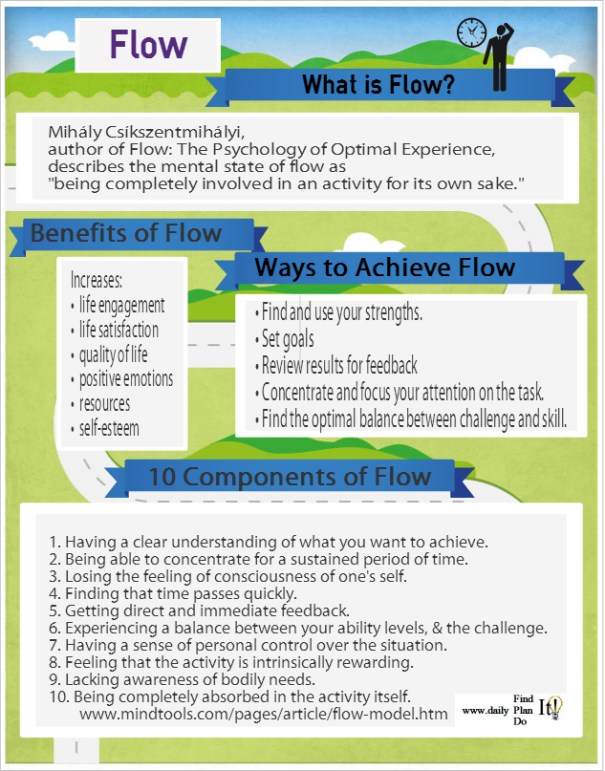
Flow Find flow, the sweet spot where challenge and skill are perfectly in balance and you lose all track of time.

KEEP GOING

lightswitchReduce distractions. If focus is needed, turn off notifications and use headphones.

pencil Clear thoughts. Write down thoughts that are distracting you from what you need to do.

batteryTake a break and recharge. Notice when your energy is low, and recharge with activities that will truly revive you.

Autopilot Create a habit and use the power of a routine. Simplify life and engage auto-pilot for routine tasks to reserve your energy for tasks that require willpower and brain-power!

 Celebrate progress!!! Check in regularly to look over results and congratulate yourself.

If all else fails

sinkProcrastinate productively. If you’re not going to do what you planned, at least accomplish something else that needs to be done!

Get motivated with 25 Quotes and Affirmations to Finally Defeat Procrastination!

VisualVermeer

See also Make Good Habits Easy, and Bad Habits Hard | The Science of Goals Infographic

Posted in productivity

Smart Skills Trading Cards: Emotions

GREATskillscolor

GREAT Skills are a) in demand in the workplace b) rarely taught, and c) very helpful in all areas of life! The GREAT Skills Trading Cards provide key information from experts for learning these skills. The links below lead to posts at The Daily PlanIt with more resources. This set on emotions, meditation & goals, is available for download at Slideshare.

EmotionCards

The set of four cards includes:

Collect the cards as you develop strengths to close the skills gap and open doors to opportunity! You may also be interested in weekly activities for a Year of Personal Growth and resources to develop the top 10 skills employers want. Find more tools the Personal Development Toolkit.


Posted in personal development

Smart Skills Trading Cards

GREATskillscolor

GREAT Skills are a) in demand in the workplace b) rarely taught, and c) very helpful in all areas of life! The GREAT Skills Trading Cards provide key information from experts for learning these skills. The links below lead to posts at The Daily PlanIt with more resources. This set of Trading Cards is about Positive Psychology.

TradingCardsSet1

The Positive Psychology set includes four cards:

  • Martin Seligman – Pillars of Wellbeing
  • Mihaly Csikszentmikalyi – Flow
  • Carol Dweck – Mindset
  • Tal BenShahar – Happiness

Download this set at Slideshare.net and collect the cards as you develop strengths to close the skills gap and open doors to opportunity! You may also be interested in weekly activities for a Year of Personal Growth and resources to develop the top 10 skills employers want. Find more tools the Personal Development Toolkit, including more GREAT Skills Trading Card sets that cover skills you probably didn’t learn in high school (and wish you had). Links to TED Talks and videos are at the Daily PlanIt Youtube playlist on happiness.

Tagged with: , , ,
Posted in Ideas That Work, personal development

Meet the Happiness Experts

HappinessWordCloud

Happiness Word Cloud from Worditout

One of the most important skills for success in work and life, is understanding what makes people happy. The field of Positive Psychology has made great strides, and many books have been written on the subject. Here is a list of 10 books from experts on happiness, with quotes provided from azquotes.com.

Learn more at the Positive Shift Happens Toolkit

Posted in personal development, positive shift

What the Brain Wants

Emily and Paul are just trying to get some work done. But they don’t do it very well until they learn to understand their brains. Author David Rock uses their stories to illustrate how the brain works in the fascinating book “Your Brain at Work.”

To think and work effectively, it is important to understand the brain and be aware of our thought processes. In the first act of the book, the author uses a metaphor for what goes on in the brain. In this metaphor:

  • The Stage is our attention
  • The Actors are our thoughts
  • The Audience is the thoughts already in our brain

The Five Functions of Conscious Thought

  1. Understand: put new actors onstage and hold them long enough to see connections to audience.
  2. Decide: hold actors onstage and compare them to one another, making value judgments.
  3. Recall: bring audience members onstage to interact with actors. (it’s easier to get recent thoughts back onstage)
  4. Memorize: get actors offstage and into audience. (practice, practice, practice: go over connections frequently)
  5. Inhibit: keep actors offstage that aren’t contributing to the story.

All of these functions require a lot of resources. It is best to tackle these tasks at times when your energy levels are high, and to use strategies to focus, gain insight, eliminate distractions, and manage emotions. There is only room onstage for so many actors, so choose them wisely. (Yes, you are the director, as we learn in the intermission.)

Takeaways

To Focus: be aware of energy levels, and do tasks in the best order. This usually means doing important work first. Develop routines so attention reserves aren’t used up by non-essentials, and use that brainpower for more important thought.

To Gain Insight: add interest with some novelty, (but not too much) choose to be curious, know when to take a break, take a walk, change perspective, and use visuals.

To Manage Distractions: Novelty gets our attention, and the brain is easily distracted. (which is summed up beautifully in this clip from the movie “Adaptation.“) Distractions have a big energy cost, and vetoing distractions also takes energy. Practice braking by learning to veto impulses before they turn into action. Stop impulses so that distractions are kept off the stage before they get on it. Once they are on stage they like to stay there.

The Director

In the intermission part of the book, we learn about the director. Awareness: the ability to observe our own thought processes, is central to managing them.

YourBrainatWork

Mind map of “Your Brain at Work” by David Rock created with mindmup. Click image to download.

The Brain is Social

After the intermission, we learn about five things that are powerful drivers in our social interactions. These are things that we want, and move toward. If we don’t get them, we feel pain and move away.

The SCARF model

  • Status-our relative position, confidence in our abilities
  • Certainty-the ability to predict what’s next
  • Autonomy-the ability to make choices
  • Relatedness-connection with others, belonging
  • Fairness-equal and just treatment

An increase in any of these is viewed as reward and desired. Loss of any of these is viewed as threat and avoided. To handle a loss of any of these, first label the emotion, then reappraise by looking at the situation from different perspectives. Handling threats is easier when you practice emotional awareness, reappraise, and have strong self-esteem. If you are tired or your attention is fragmented by many demands, it is harder to handle them.

To reappraise, ask: What’s going on with the other person? Are you interpreting the situation accurately? Are expectations realistic?

Reappraisal is the Killer App

  1. re-interpret (re-frame)
  2. normalize (for example, expect to experience stress when starting a new job)
  3. re-order (increase or decrease value placed)
  4. re-position (get a different perspective)

Things to do when working with others: start off with icebreakers to connect, be open and transparent about your goals, outline expectations upfront, make it visual, ask questions that will lead to insights, focus on solutions (rather than problems), use humor, use your strengths, play against yourself (rather than compete with others), take steps to correct unfairness like volunteering for a cause.

Knowing what the brain wants and how it works may be the best thing you’ve ever done for your productivity.

To learn more, read David Rock’s book and watch his TED Talk, Learning About the Brain Changes Everything.


Tagged with: ,
Posted in Books, productivity, work skills
eBooks

Enter your email address to follow this blog and receive notifications of new posts by email.

Archives
Blog Stats
  • 740,053 hits