A Look at My System and Workspace

I developed the Daily PlanIt Keep It Super Simple (K.I.S.S.) System to combine the best features of electronic systems with the ability to print a paper copy. These pictures show how it fits together with my files and workspace. As I try new things and make changes, my system has been continuously evolving. It’s still not perfect, but works pretty well for me.

My system relies heavily on Google. I use Google Calendar, Google Tasks (plus some apps) and Google Drive.

Slide4

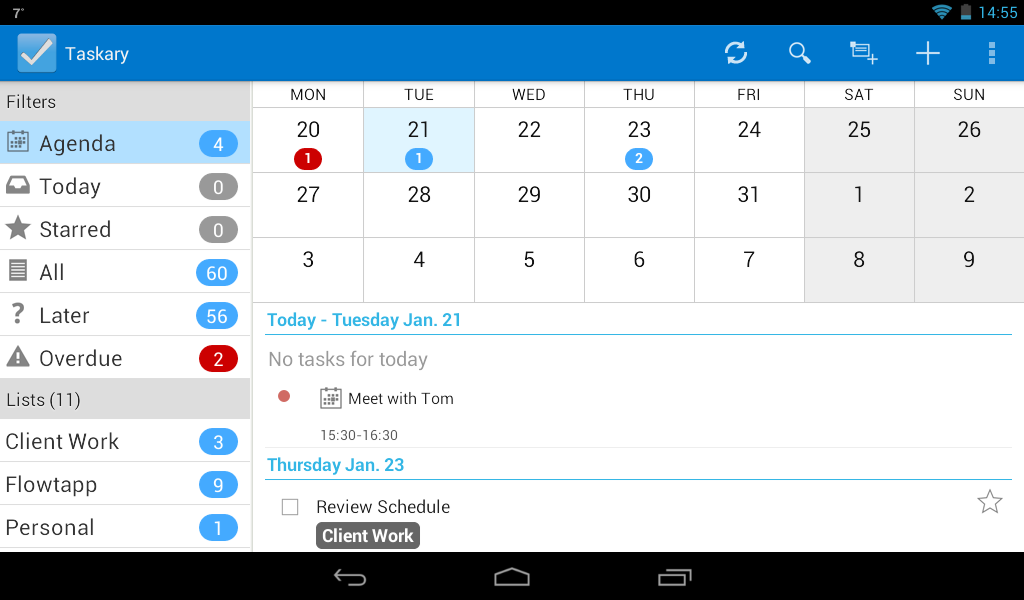
For my To Do List, I use a combination of Google Tasks (for repeating tasks) plus GTasks and Tasks & To-do for Google Tasks. I can add tasks in Google Calendar when I’m at my computer, or in Tasks & To-do for Google Tasks with my tablet. Tasks & To-do for Google Tasks is an Android app I’ve been using for awhile now, and I like it a lot. You can create subtasks for projects, set reminders, and it syncs with Google.

Google Tasks, To-do - Taskary - screenshot

Tasks & To-do for Google Tasks

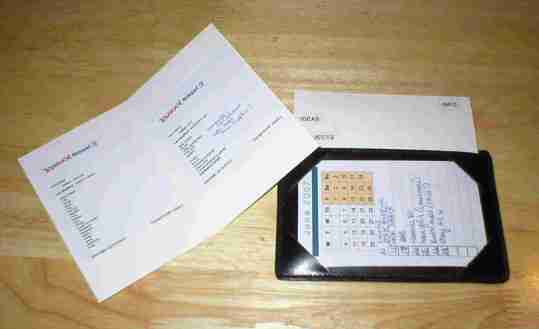
Combination: I send myself an email of my to do list from GTasks to print out as part of the weekly review process. This could be done more frequently if needed. I keep it in a leather index card holder inside a cut-down plastic project file. Blank index cards to capture notes are in the back pocket of the holder.

mini system

To Do ListCheck out the Free Tools page for paper forms and read more about possibilities for a To Do list here. There’s a free printable set of a weekly planning form plus five daily planning forms (pdf). I previously used these with the portable gtd mini system, and a Mead pocket calendar.

Desktop Action Files

The three front files are essential to my bill paying system: Checkbook, Bills, and To File. The files after that either are for idea capture or ones I refer to frequently. I keep two yellow legal pads in front of this file: 1) ideas and notes, 2) project planning.

Action File Headings

Project Files

My Project Files are in a wire step folder holder, and in front of that is a plastic folder that holds my value statement and an outline of what I do, why I do it, and the features and benefits of each project. See Also: Files.

Project File

Project File

Project Planning

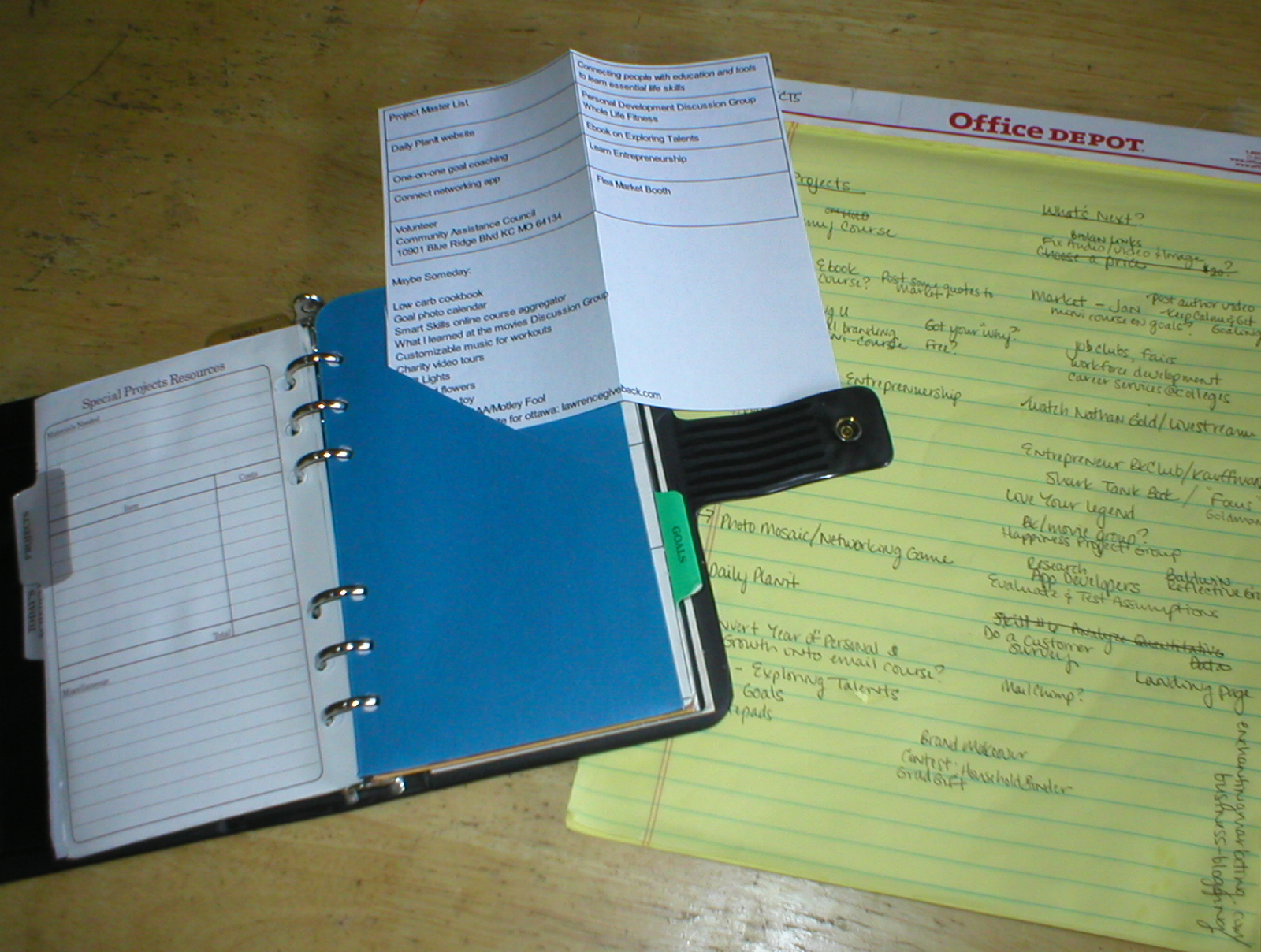
I use a yellow legal pad for planning projects, with a list of projects down the left side, and the next step on the right side. I also keep a Project Master List in Google Drive and print out a copy for the paper planner tool for the weekly review. There’s a free printable Project Master List (pdf) too.

Project Planning

Project Planning

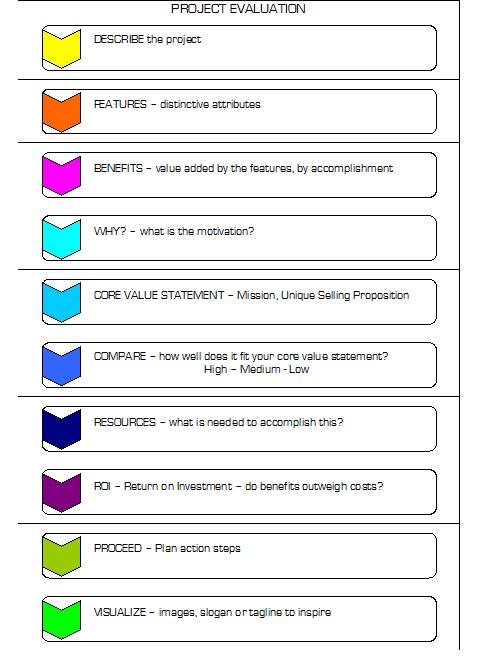
Project Evaluation

More in-depth about evaluating projects, with a free printable Project Evaluation form (pdf)

Project Evaluation

Project Evaluation

Weekly Review

The Paper Planner Tool for the Weekly Review contains printed information for the process, and Day Runner slash pockets for frequently changing lists printed out from Google Drive.

Paper Planner Tool for the Weekly Review

Paper Planner Tool for the Weekly Review

Desk

My desk consists of a table with a printer on one end, and a rolling computer cart for my laptop. For many years I worked in a much smaller space, and I love being able to spread out now! Here’s what it looks like when I’m deeply into a project.

Desk and computer cart

Desk and computer cart

Files

My desktop Action and Project Files are on top of a microwave cart within reach but off to the side of my desk. I discuss these and other files here. A four drawer file cabinet and binders, including my Household Notebook, are also important elements of my workspace.

Desktop Files

Desktop Action and Project Files

Workspace

The ideal workspace helps us engage with both creativity and productivity. It can be challenging to find tools that help us accomplish our work effectively. That wraps up what it looks like here at the Daily PlanIt. Maybe there are some helpful ideas, but choices about systems and workspaces are very personal. May you find the tools that work for you!

Learn more about productivity at the free Time Management 101 Tutorial.

Tagged with: , , , , , ,
Posted in productivity

System Reboot

Earlier this week, my laptop started to act like it was possessed. The cursor began crazily jerking across the screen on a path of it’s own choosing, definitely not in the direction I wished to go. I tried some troubleshooting tactics. I updated my virus checker and did a scan. I did a defrag. I attempted a system restore. And then it seemed okay. I thought I had fixed it, until I plugged it into the outlet in the kitchen, the same outlet I was plugged into when the problem began. Then the difficulty returned, apparently only occurring in those conditions. One of my friends advised me, “Don’t plug it into the kitchen outlet!” That’s pretty good advice, I’d say.

While my computer was unavailable (it took hours to defrag) I spent some time reviewing the process and systems I use to manage tasks and projects. Some updating was definitely in order. It reminded me of the importance of reviewing, and made me think about how it should be done regularly. If the thought of doing an in-depth review is daunting, I have found that even a quick review can be beneficial. If only a small amount of time is dedicated to glancing back and then forward, it still provides a good return for the investment.  I also ran across a fantastic free tool for an annual review from The Art of Non-Conformity.

Things I learned from a system reboot

When facing a problem:

1. If certain conditions cause problems, and those conditions are not essential, avoid them! This is kind of a derivative of “If it’s not broke, don’t fix it.”

2. Experiment to eliminate possible causes.

3. Don’t forget to perform routine maintenance.

4. If you’re stuck, review your system, your projects and goals.

More problems I ran into this week:

spamI reached the limit of my endurance for Spam. Frankly, I never have had much appreciation for any kind of spam. Lately spammers have gotten quite tricky in their methods for getting through spam filters. A genuine comment on a post has become increasingly rare. I resolved to turn off comments, although I invite genuine interaction on the Daily PlanIt Facebook page. They came to this conclusion at Copyblogger back in March. (I’ve seen spam in commments on other Facebook pages, so we’ll see how that goes.)  Once the decision was made, I discovered there isn’t just one simple switch to throw. To truly turn them all off would require going to every single post, and there are lots of them here. My hope is that turning off comments on this and future posts and the pages will deter most of the spammers. Talk about time wasters, spam is on my hit list. dislike

Awhile back, an employee at Office Depot persuaded me to purchase several printer cartridges of their brand rather than genuine HP printer cartridges. I knew better than to do that, but allowed myself to be swayed. The first one perked along well, but eventually my printer revolted. When I replaced the cartridge with the real deal, my printer was once again happy. So I attempted to return the other Office Depot cartridges, but was refused a refund. I’m not mad, but I AM going to spread the word, and I’ll never buy another cartridge there. I’m just saying.

Do you do regular maintenance and a weekly review? An annual review? Let me know on the Daily PlanIt Facebook page!


Tagged with:
Posted in goals, productivity

A Daily Routine

There is benefit in having a daily routine. These often simple yet essential tasks keep us on the right track. It is interesting to see how others arrange their days. (See the articles listed at the end of this post.) But just as we must each find a productivity system that works best for us, everyone needs their own daily routine for their unique life. Getting started on a task or a day is often the hardest part. Once a routine is in place, it becomes an automatic way to begin. The idea is to free up brain cells that can be used for more creative pursuits. Of course, the occasional shake-up adds variety and invites inspiration.

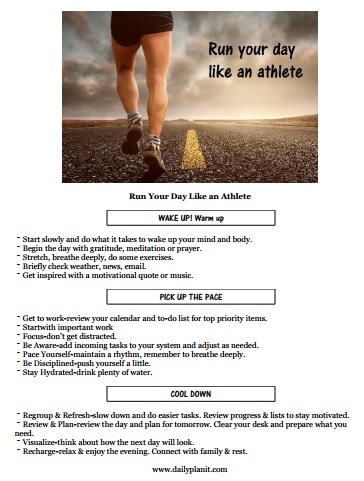
Optimize Your Day With the Science of Productivity and Run Your Day Like an Athlete. Scheduling with Time Blocking and Focus Themes can be helpful to design a daily routine that works well for you. Include practices that have been shown to increase happiness & well-being to really make Positive Shift Happen.

I often practice a standing meditation as part of my daily routine to touch on all of the senses while stretching and breathing deeply.

Grab your favorite printable daily form and design a routine that works for you. Remember to consider your defaults and make them work for you. I am fortunate to have more freedom and flexibility now, but generally follow these routines.

Morning

“If today were the last day of my life, would I want to do what I’m going to do?” -Steve Jobs

“What will I do today that’s worth talking about tomorrow?” – Montel Williams

Waking up (videos at my Routine Youtube playlist)

Getting going

Noon lunch/rest

Afternoon

  • Be aware, stay hydrated
  • Review progress and stay on track
  • Add routine tasks and errands
  • Kick up the music
  • Examine results and plan tomorrow
  • Start to cool down and clear desk

Evening

  • Dinner and cleanup
  • Easy, calming music
  • Conversation and connection
  • Include weightlifting and posture exercises when watching tv
  • Dedicate time to reading and preparation for tomorrow
  • Establish habits to relax and unwind
  • Doors locked, wash up/brush teeth

What does your daily routine look like?

See also

Tagged with:
Posted in productivity

Crash

seat-belt-2The facts do not lie…wearing a seatbelt greatly improves the chance of living through a car accident. Still, some  people resist wearing a seatbelt when driving.

I know seeing my nephew in the hospital after his car accident had an immediate effect on my seatbelt behavior, and I have made it a habit to always buckle up since then. He sustained a major head injury, and I didn’t know if he was going to make it. I’ll never forget how he looked lying there, his face so injured and swollen, tubes everywhere. I was so scared that we might lose him. It took some time, but thankfully he did recover.

DAVIDCAR.JPG

My nephew’s car after the accident


The following scenes from three movies I love are of car crashes that also had an emotional impact on me. I love movies that connect with our emotions in a powerful way, and these definitely do that.

The car crash scene from the movie “Adaptation” shows how quickly an accident can happen.

After the car crash in the opening scene of the movie “The Lookout” the character played by Joseph Gordon-Levitt will never be the same again.

Finally, a dramatic scene from the movie “Crash.”

I urge you to watch the clips, and to always buckle up and drive with caution.

Posted in Ideas That Work

It’s Not Just Who You Know (Book Review)

'It's Not Just Who You Know'“It’s Not Just Who You Know” by Tommy Spaulding is the May choice of the 12 Books group at Goodreads.

The author starts out strong with engaging stories that describe how the relationships he developed helped him to overcome a learning disability and become a leader. However, by the time I reached the middle of the book I was worn out by the level of connection and amount of networking involved. The author is connected to many well-known people, and my thoughts turned to discouragement that this was way more than the average person could ever expect to manage. One review on Amazon describes Tommy Spaulding’s approach as “extroversion on steroids,” and after awhile introverts like me will likely begin to find the ideas daunting. Yet, there is useful information that can be employed on a smaller scale and I’m glad I read the book.

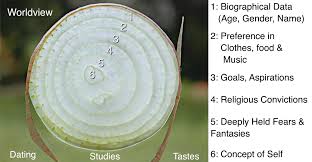
The Five Floors of Relationships

The author’s model of understanding relationships is retrofitted from the five levels of communication commonly studied in communication theory. Relationships range from the basic transactions of the First Floor to the high level of Fifth Floor relationships.

The Back of the Business Card

The book shows how to build relationships beyond the basic information that is on the front of a business card. Think about turning the business card over to the back and filling in the blanks by discovering more about a person’s interests with observation, questions, and listening. He coins the term netgiving rather than networking for a focus on what we can give rather than what we can get in our interactions with others. Many of the articles I’ve read about networking also recommend this approach.

Nine Key Traits are helpful in achieving real relationships: authenticity, humility, empathy, confidentiality, vulnerability, curiosity, generosity, humor, and gratitude. With short chapters on each of these traits, the author shows how many of the traits can be developed.

There is a need for information about how to develop relationships, and this book provides insights beyond Dale Carnegie’s classic book “How to Win Friends and Influence People.”

Resources:

A First Look at Communication Theory

Altman & Taylor’s Social Penetration Theory at Wikipedia

CommunicationTheory

Posted in Books, work skills

The Surprising Truth About the Workforce Gap

…and the secret reason for it. Why Soft Skills are Lacking and What You Can Do About It.

Soft Skills are LackingThe Surprising Truth About the Workforce Gap

Studies often show a gap between skills desired by employers and skills that workers possess, with soft skills often lacking. Some studies show 60% of employers think applicants are lacking communication, critical thinking, creativity, collaboration and other soft skills. A Time article about the soft skills gap.

The Secret Reason: Why is there a lack of soft skills in the workforce? We aren’t teaching them!

Take a look thtop10skillse top 10 skills employers want.  As I worked on this series of posts with links to resources to learn the skills, it became painfully obvious to me that:

1) there aren’t enough of these resources.

2) there is a large gap between what employers want and what is taught.

The Bad News

Many of the top 10 skills employers want are not often taught in traditional education.

Were you taught goal setting and time management in school? Did you have a class in communication, understanding emotions and problem solving? You may have learned a little about these things along the way, but these skills are rarely purposely taught.

And not only are these skills important to employers, many are critical to success in other areas of our life…and they usually aren’t being taught.

That really doesn’t make sense to me.

We say we need workers with these skills, that we need to increase employment, but we don’t take the steps needed to make it happen.

Why Aren’t Soft Skills Taught? Teaching soft skills may not be easy…but it can and should be done.

The Good News

Can you imagine a world full of people living at maximum potential? Life is so much better when people know what their talents are and how they want to use them, do work they love, earn the money they need, communicate well, understand and manage emotions, have strong relationships and friendships, develop physical strength and energy, connect with spiritual beliefs, develop character, and set goals and manage time effectively.

I believe these skills can be learned and developed for an optimal life and a better world.

Engagement at Work

Gallup surveys frequently show low levels of engagement at work. Will increased skills contribute to higher engagement? I believe it will.

What You Can Do About It

If you believe this too and want to get involved, you may want to connect with others interested in personal development by forming your own Whole Life Fitness group. Consider setting work goals, selecting learning activities for a personal development plan, and developing work skills.

Tagged with: ,
Posted in work skills

Skills Employers Want #10 – Ability to Sell or Influence Others

The ability to sell or influence others is the number ten skill on the list of top ten skills employers are looking for. Selling is something we all must do at times, whether we are at a job interview, networking, or pitching an idea to a supervisor, investor, or customer. It involves communicating clearly who you are, what you want to do and why in a captivating way. (Learn more at the Brand and Purpose Toolkit)

Prepare with information: product or service knowledge
Identify the market: target audience
Target key drivers (needs) and engage interest
Communicate with confidence
Highlight the Unique Selling Proposition: focus on benefits that can help them

Resources for learning sales skills:

presentation

Presentations are often a critical part of selling an idea or pitching a product. Learn more at The Simple Way to Create a Compelling Talk.

Plan, practice, and peform with passion. Remember the ABCDs of presentations:

  • Ask what the audience needs to believe so they will want to do the desired action. Watch Tim Pollard TED talk, see below.
  • Beware bullet points: use good images, limit words, one key message per slide – See Who Moved My Brain slide show by Merlin Mann (and see it in action here).
  • Contrast current reality with a vision of transformation. Watch Nancy Duarte TED Talk, see below.
  • Don’t die by Powerpoint. Watch David JP Phillips TED talk, see below.

Presentations should be:

  • Simple and short – Watch TED talk Secrets of Success in 8 Minutes by Richard St. John
  • Clear and concise
  • Original and organized
  • Relevant and remarkable
  • Enjoyable and entertaining

The same acronym can be applied to structure:

  • Start strong – begin with a bang
  • Captivate attention – with pictures, props, participation – TED talk How to engage an audience Padraig Hyland
  • Offer a journey with storytelling – Watch Pixar: the Secret to Storytelling
  • Reversals – pose a question or expose a gap in knowledge and then fill it
  • End well – explain the main point

Capture attention and interest with something:

Books and TED Talks

Amazon affiliate links to books provide a small commission to help support the Daily PlanIt.

Learn more

The ability to tell a story is an important part of communicating a message. Check out Entrepreneurial Selling with Craig Wortman at Kauffman Founders School.

From the article “6 Easy-to-Steal Rituals of Extremely Successful People” at marcandangel.com:

“Selling is convincing other people of the benefits of working directly with YOU.”

All of the successful business owners they interviewed feel that the ability to sell themselves, their ideas, and what they have to offer is the one skill that most contributes to their success. The resources in this post can help you learn and develop these skills. Find more TED talks by speakers who are also authors at TED Talk book discussion.

Tagged with: , ,
Posted in communication, work skills

Compelling People

I began following the books chosen by the 12 Books group at Goodreads with the April choice, “Compelling People: the hidden qualities that make us influential” by John Neffinger and Matthew Kohut. Compelling

The authors are partners in KNP Communications, a firm specializing in presentation coaching and communications strategy for corporate and political clients. They conclude that people who are the most effective at influencing others possess the ability to project both strength and warmth, a task that can be difficult. Communicating these two qualities can be at odds, and those who are compelling can swiftly switch between them.

Strength=competence, confidence, mastery

Warmth=likeability, interest, belonging

Strength and warmth can only be conveyed if they are genuine. This book shows how we can remove obstacles that prevent us from 1)being aware of strength and warmth and 2)expressing them well. We can improve how we connect with emotions and align our actions for authentic expression of them.

Body language plays a large role, and posture is key in projecting strength. Standing tall is often half the battle. Prior to situations where we wish to project strength, we can stretch up and out. The TED Talk by  Amy Cuddy: Your body language shapes who you are describes how this works.

A smile with flinty eyes conveys strength, and a smile with a twinkle in the eyes conveys warmth. Strength and warmth are energies, and to better convey them we can psych up our energy level by connecting with memories that remind us of a time we felt strong and warm. We can play or think of music that evokes those feelings. We can learn from watching others who excel at this and notice their body language, voice and message.

In presentations stories naturally project strength and warmth together. Stories work best when they feature people doing and feeling things, moral dilemmas, good and bad characters. When done well, humor can also be helpful.

The best way to be our own coach and improve is to record our efforts while practicing.

When we connect and express our strength and warmth, we become compelling to ourselves and to others too.

Business Insider Qualities That Make People Influential

Posted in Books, personal development, work skills

The Economy of Goals

Economic Principles Meet the Pleasure Principle

It is a basic economic principle that the benefit or value of a product or service must exceed the resources required to obtain it in order for it to be chosen. In other words, if we think the price is too high for the perceived value, we aren’t going to buy it, regardless of what is exchanged in order to get it. Another principle is that choices have intended and unintended consequences which lie in the future. Let’s consider these principles as applied to the goal setting process to gain insight into the choices we make.

A couple of things have come my way recently that have made me stop and say…

“Wait, What? Pain is involved?”

The motivational video “Why Do We Fall” says “It’s not about how hard you get hit, it’s about how hard you get hit and keep moving forward.”

ItWillHurtThis quote from Prolific Living says “It will hurt. It will take time and dedication and willpower. It will require sacrifice. There will be temptation (to quit) but when you reach your goal, it will have been worth it. So don’t quit. Don’t fuss or whine or complain. Just Keep Hustling.”

Humans do their best to avoid pain, and seek pleasure. Yet reaching goals can require us to embrace temporary pain in pursuit of the long-term pleasure of accomplishing the goal. We have to believe it is worth it, or we will likely give up when we encounter hardships and obstacles. To achieve the satisfaction that comes from a job well done means developing agency. To contribute and to excel means going above and beyond to challenge yourself.

In Freudian psychology, the pleasure principle is the instinctual seeking of pleasure and avoiding of pain in order to satisfy biological and psychological needs. But to achieve success in some endeavors like sports, pain can be a part of the process to reach the goal. It takes strength to take on that kind of challenge. It takes the ability to delay gratification and keep focused on the long term result.

Anything worth doing takes effort. By definition, reaching for a goal is not going to be easy. When you know what you want to do, and how to do it, you must want it enough to commit to it. And that often means getting up and out of your comfort zone. I need to remember this to get me going above and beyond the path of least resistance. It reminds me of the scene in the movie “Stand and Deliver” based on the true story of teacher Jaime Escalante where he tells his students, “you’ve got to have the desire!” …enough desire to get you past inertia and over the hurdles that stand between you and the goal. You’ve got to have the grit to keep going even when the going gets tough.

The benefit of a goal must exceed the resources required to obtain it.

PricevsValueI want to apply these thoughts to a couple of examples. The first one that comes to mind is working out. Working out requires a commitment of several resources. You have to take the time to get up and go do it. People often don’t view it as that pleasurable a thing to do. (At least, I don’t) It doesn’t have to cost money, but you might invest in a gym membership, a dvd, or equipment. It’s just much easier not to do it. Even though I knew I could gain strength, lose weight, and probably look better, it wasn’t enough to overcome inertia. My husband did something that tipped the scales in favor of my perceived value of working out. He described with great enthusiasm how aerobic exercise works. He promised me I would gain more energy and feel better by making the effort to work out. And I wanted that enough to commit to the goal. I probably would not have made the investment of resources to commit to this goal if not for being educated by him about the value of it. When I clearly saw all of the pros, their significance grew to outweigh the cons. The benefits of working out tipped the balance, becoming greater than the cost of achieving it. I now focus on how good I feel when I work out, and not on the time and effort it takes.

Another example is starting your own business. The costs are substantial: investing in acquiring the skills needed, investment of time, money and hard work, taking a risk. The benefits can also be great: independence, challenge, and hopefully, financial success. It’s an undertaking only chosen by those who believe the benefits outweigh the cost of the goal.

To make intelligent choices, we need to be educated about the true value and the cost of goals, and the long term effects of choosing them, or not. We can use this knowledge to tip the scales in favor of a goal, to make us willing to tackle the costs, the pain, the effort it is going to take, and make good decisions about the choices we make.

Determination and Delayed Gratification are two skills needed for successful goal attainment.

Learn how to set goals with my ebook “Get Goaling,”   or a free short course on How to Set Goals.

Posted in goals

Skills Employers Want #9- Ability to create and edit written reports

The ability to create and/or edit written reports is number nine on the list of the top ten skills employers are looking for. Writing is one form of communication that requires a certain set of skills.

ReportWriting

More courses on writing beyond reports…

Read ” Writing That Works” by Kenneth Roman

Tagged with: ,
Posted in work skills
eBooks

Enter your email address to follow this blog and receive notifications of new posts by email.

Archives
Blog Stats
  • 741,633 hits